Water Leak Detector Manufacturer
Each sensor triggers on a conductance bridge: a rising film of water closes the gap between two probe contacts and fires the alarm, so a slow drip is caught while it is still a few millimetres deep. For you that means fewer missed-leak returns and a flood detector your buyers trust under their own label.
The rest of this page is the wet-side proof — how the bridge stays sensitive without nuisance trips, how the body survives the damp, and how far a private-label build can go.
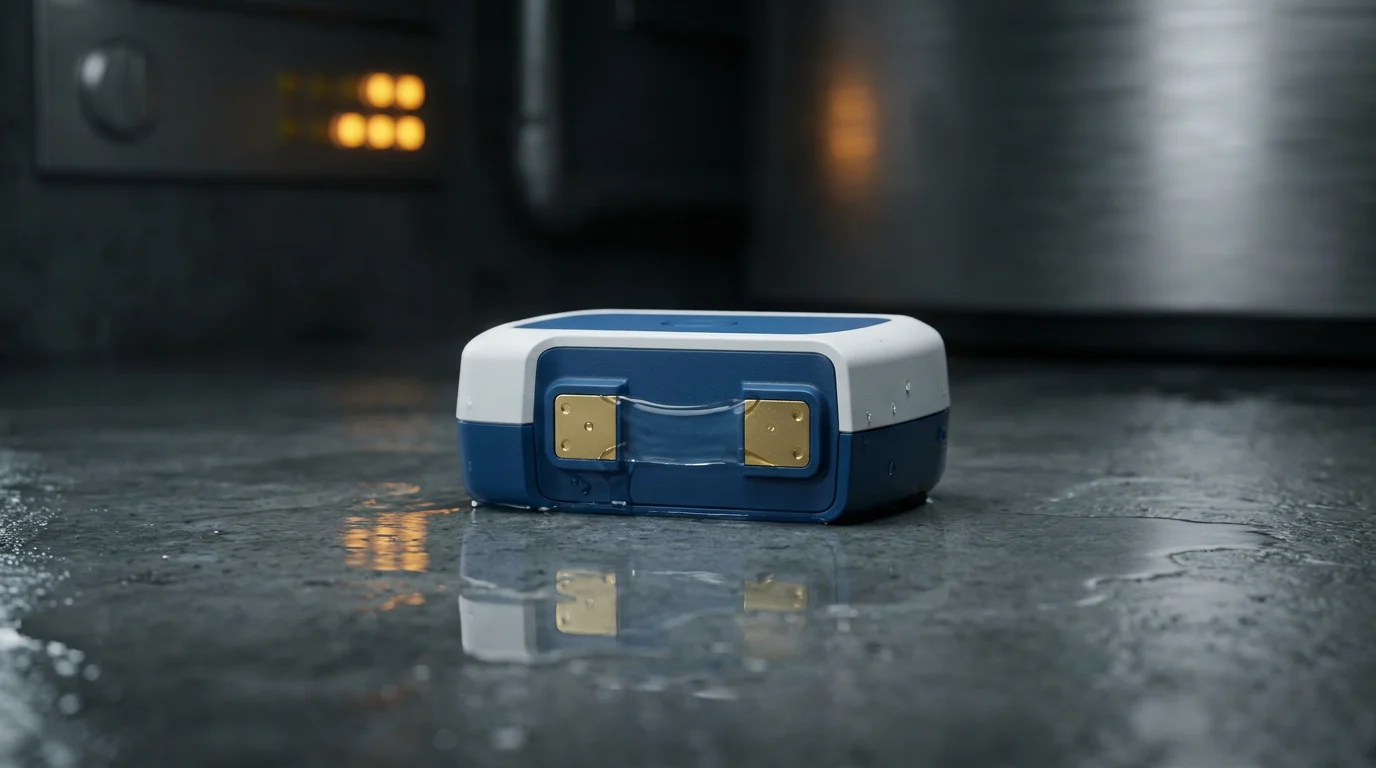
The Leak-Sensor Range You Can Stock or Rebrand
Four sensing bodies and three connectivity builds, so a single wholesale flood detector supplier covers your whole water-alarm shelf.
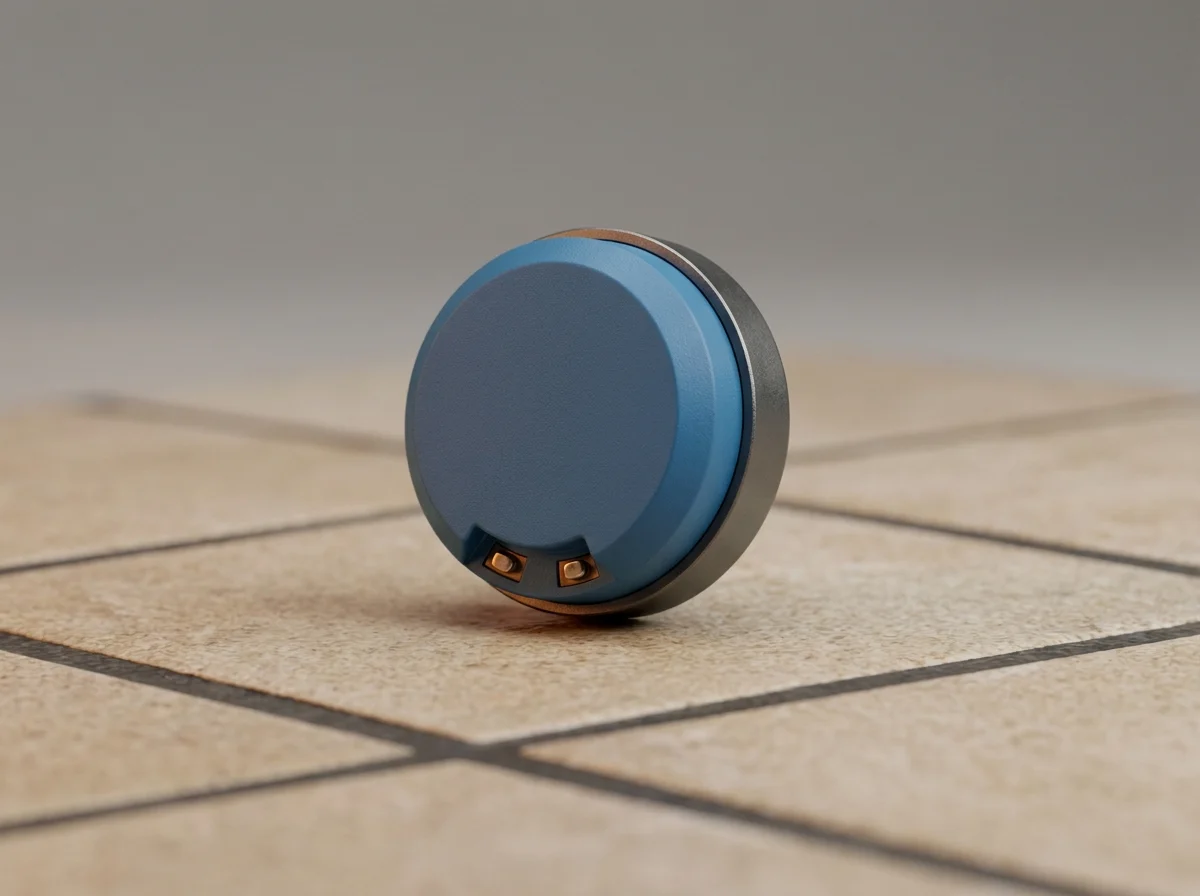
Two contacts on its underside, sitting flat at a floor's low point — it catches water the moment it spreads that far.
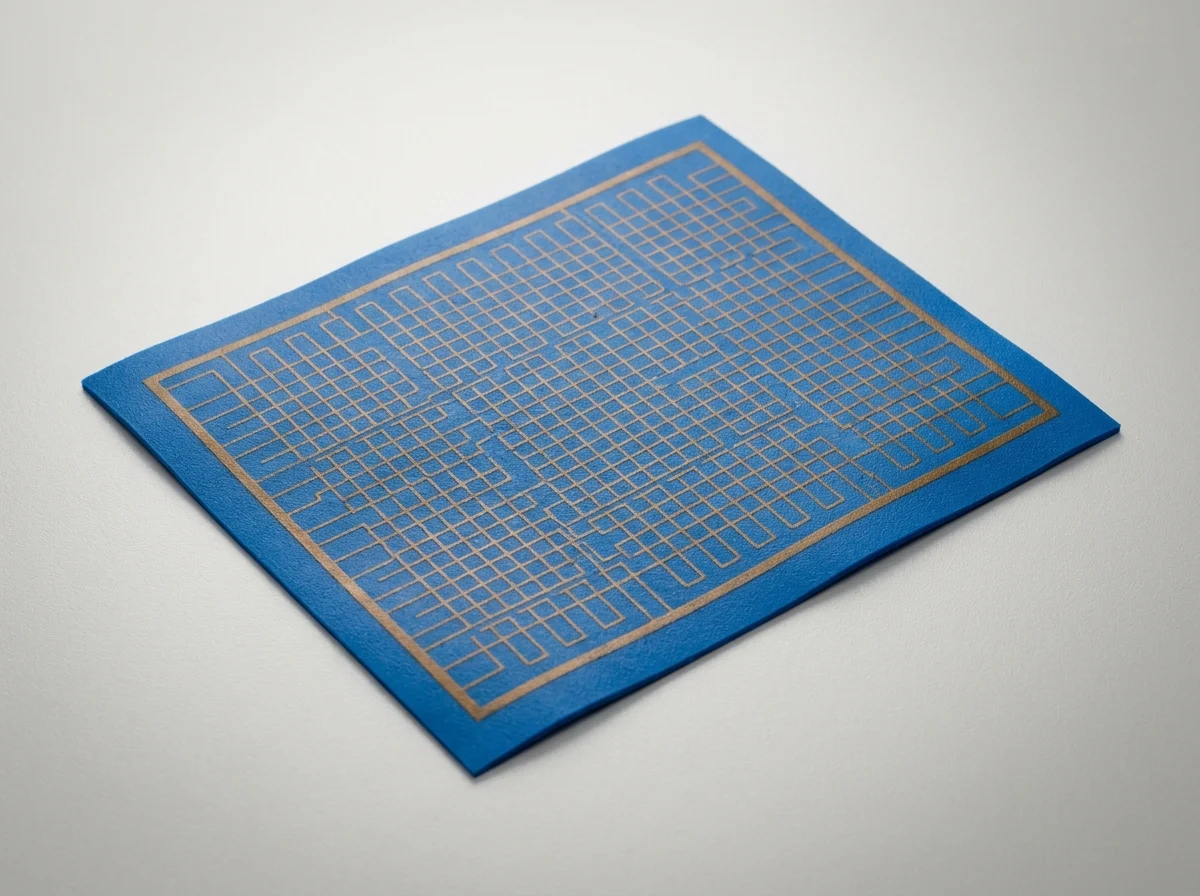
A conductive grid printed across a thin pad, so a large footprint — a laundry floor or a raised server-room panel — alarms wherever it wets.
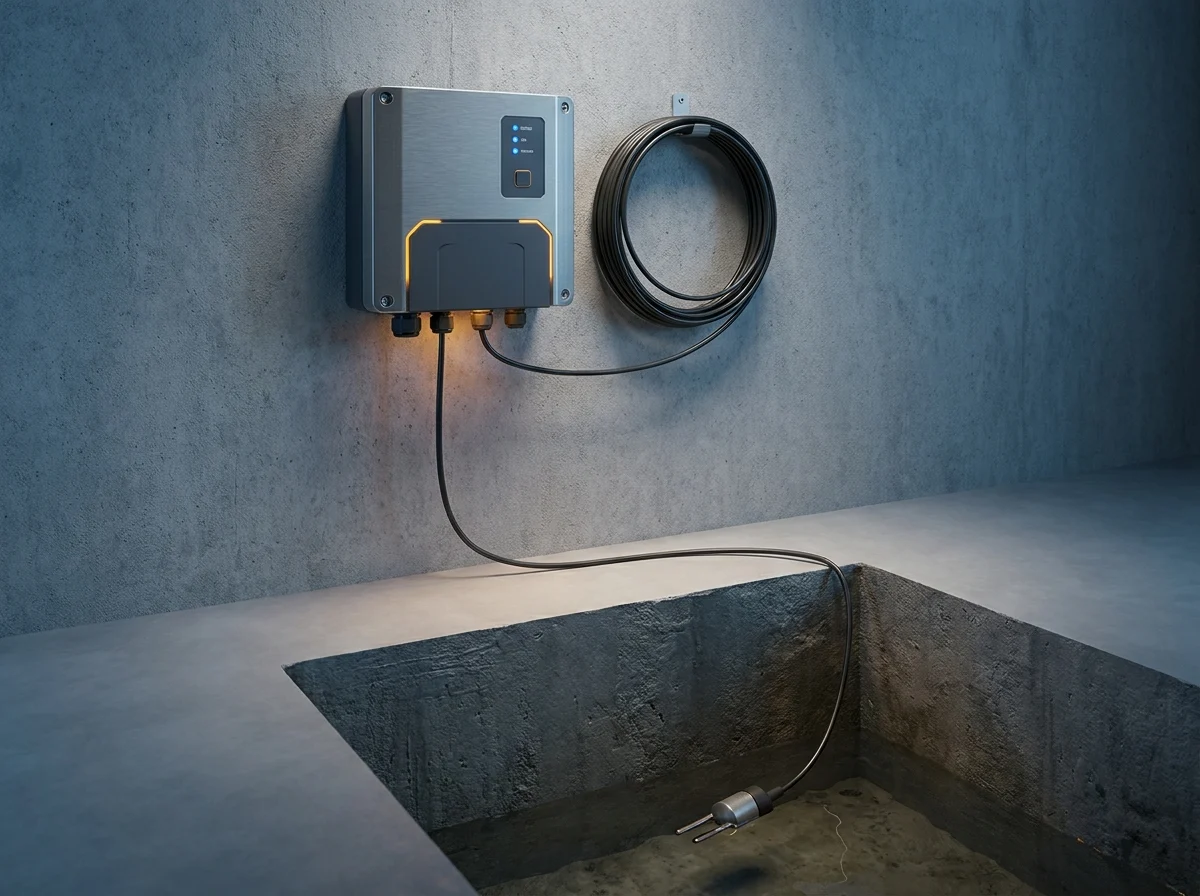
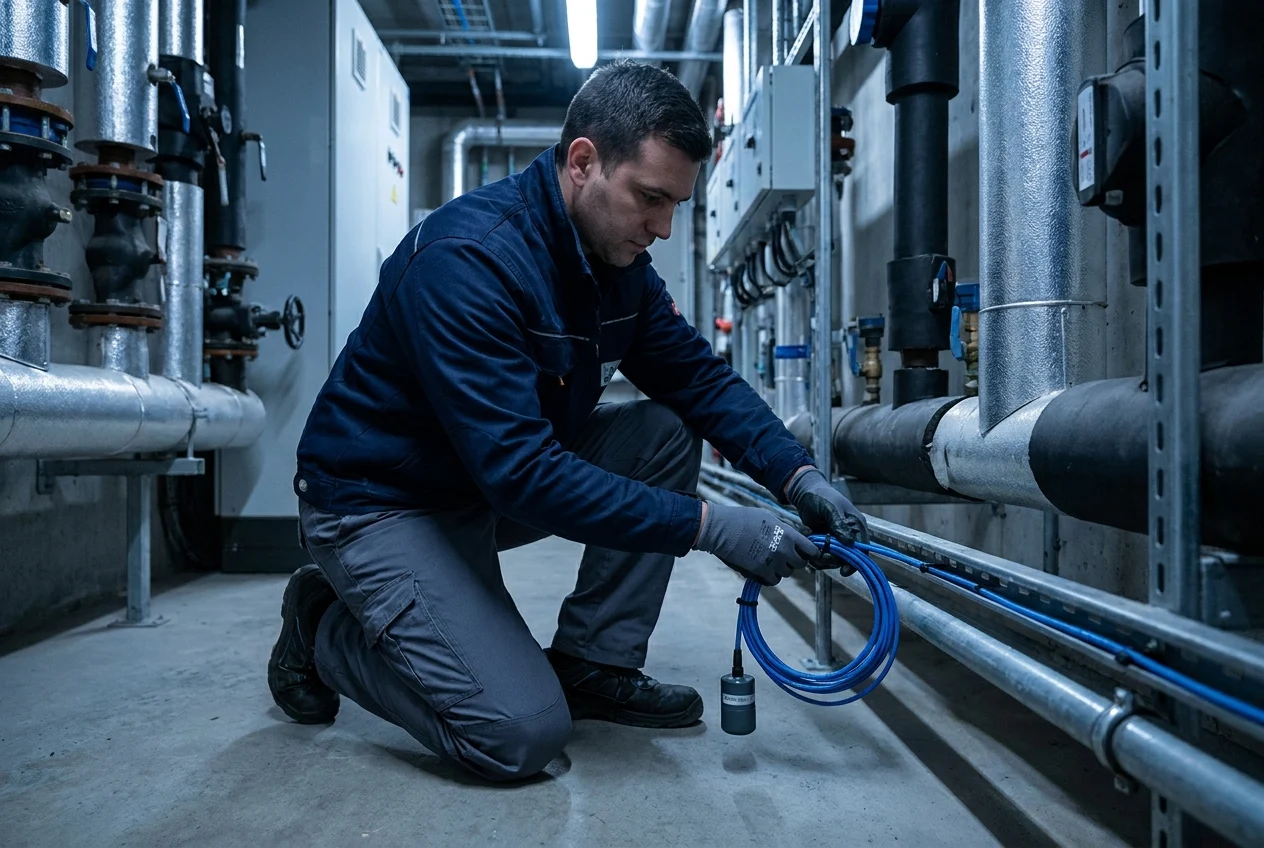
Keeps the alarm unit dry and high on a wall while a 2 m (or custom) probe drops into a sump, a drip tray, or behind a water heater.
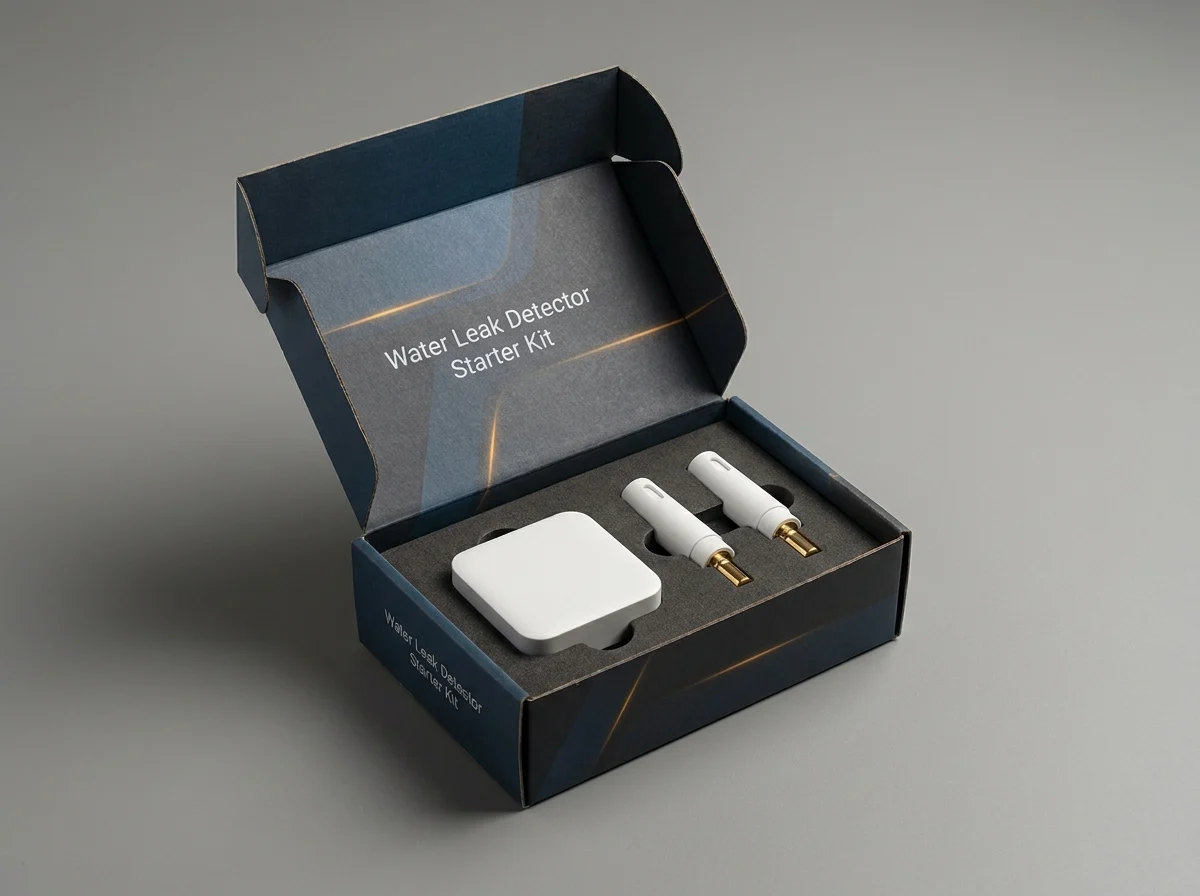
Boxed with a hub for buyers who want a ready starter set — one range, so your standard, custom and kit SKUs come off the same line.
Who Sources Our Flood & Leak Detectors
Four buyer types, split by where the water risk sits rather than by sales channel.
Property & facilities install teams
Fitting detectors across apartment blocks, hotels and plant rooms to stop water damage before it spreads.
Cabled-probe & auto-shut-off builds + sign-off QC records
Insurance-led bulk programs
Restoration firms and insurer-backed rollouts deploying sensors to cut escape-of-water claims.
Volume stock + certificates & test reports for the compliance file
Smart-home channel distributors
Filling a flood-sensor gap in a Zigbee / WiFi range. As a smart sensor alarm supplier our builds certify onto Tuya / Smart Life out of the box.
Drops into an existing ecosystem, no re-cert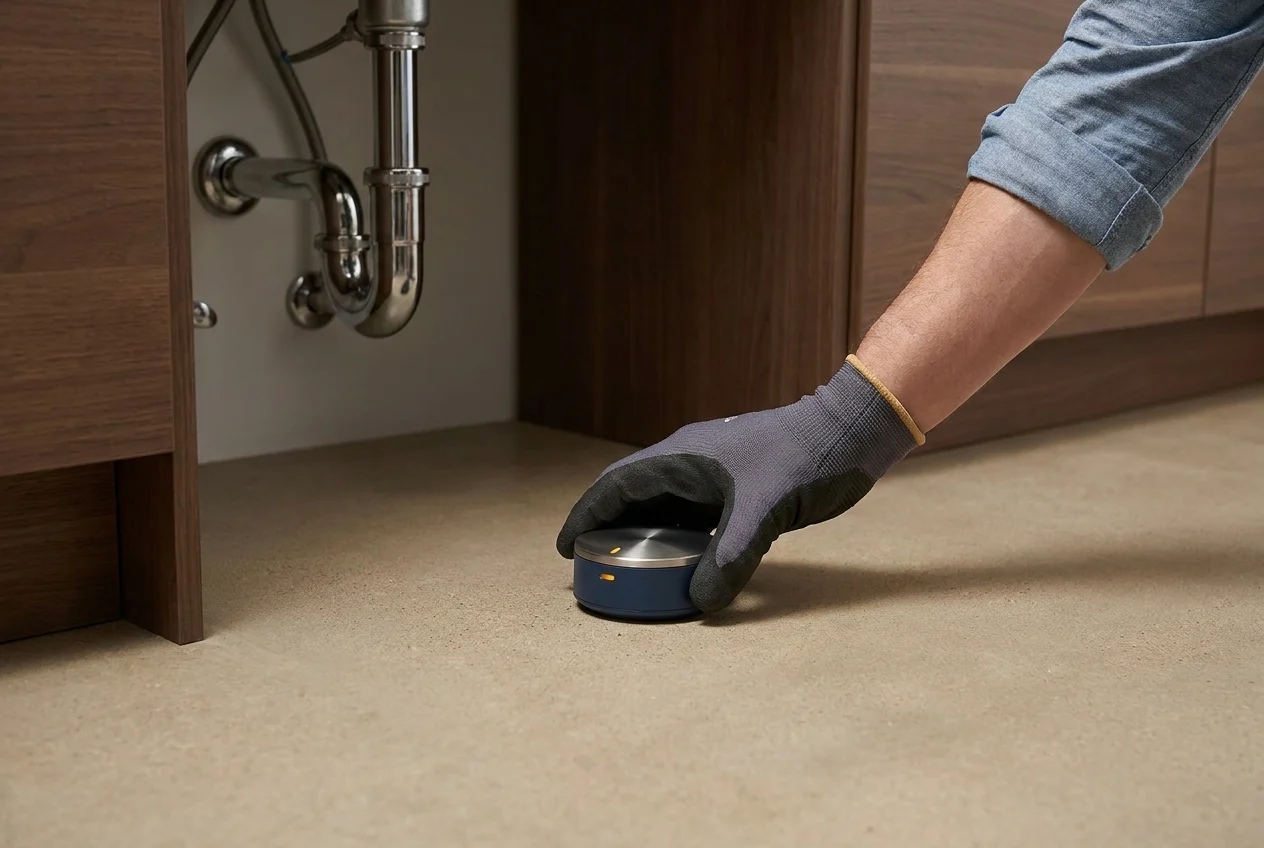
Residential retrofit resellers
Including small OEM home security sensors runs, moving single-sensor and kit units to homeowners patching their own weak spots.
Water-tested & false-alarm-tuned — the "didn't detect" review never landsThe Wet Spots Your Customers Forget Until the Ceiling Stains
Six placements that decide which body a buyer actually needs — placement is the real decision, and it maps cleanly onto the four bodies above.
Supply-line and trap drips hide in the dark for months.
Spot probeA burst hose is the classic overnight flood.
Spot probe at the baseWeeps slowly before a tank fails; the low-sitting probe reads it early.
Spot probeOverflows on condensate across the whole tray.
Sensing padFlags a dead pump — the cabled probe drops in while the unit stays dry above.
Cabled probeTakes groundwater and appliance backups across a wide area.
Sensing padHow the Conductance Bridge Triggers the Alarm
The mechanic that separates a sensor which catches the film from one that waits for the flood.
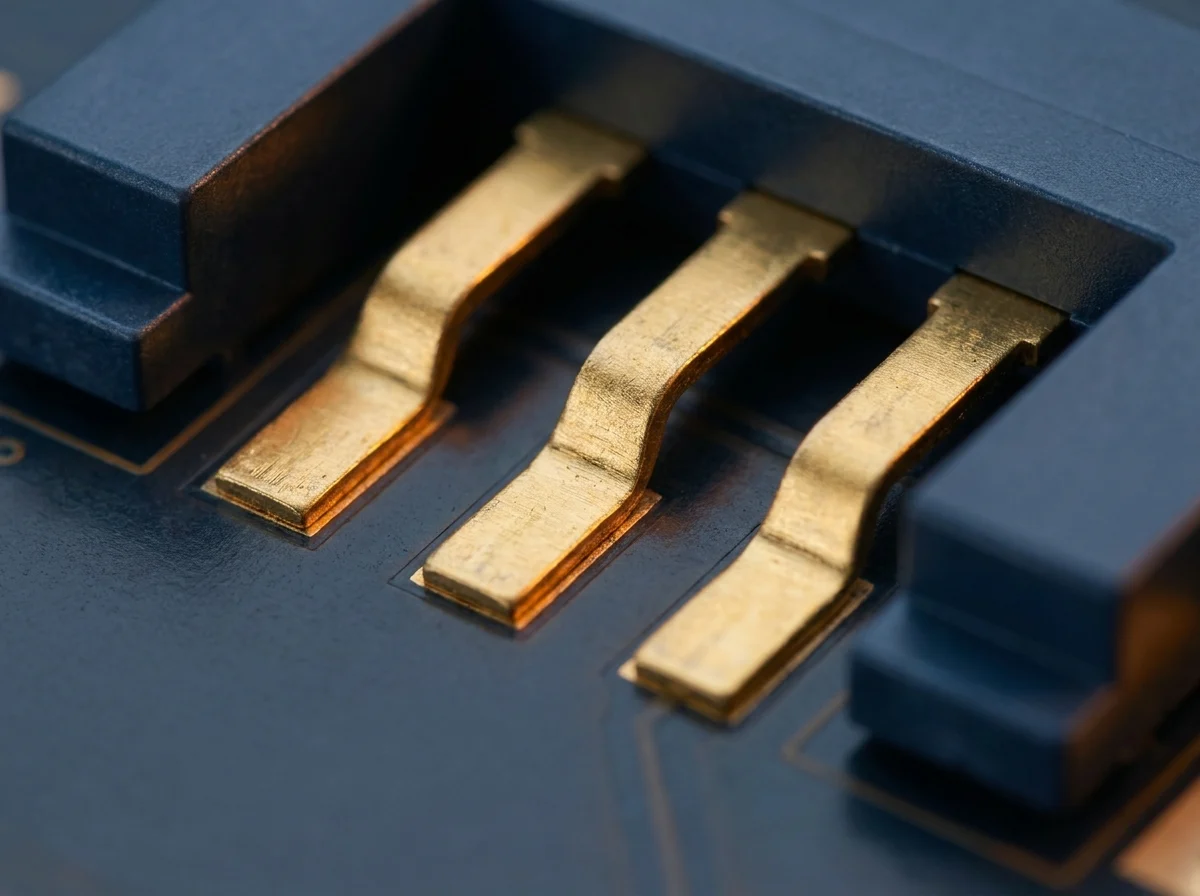
- Two contacts sit open in dry airTwo gold-plated probe contacts (or the printed grid on a sensing pad) hold the alarm circuit off while everything stays dry.
- A ~1 mm film closes the circuitWhen water rises and forms a film as thin as roughly 1 mm across both contacts, the film conducts, closes the circuit and trips the alarm — because the water itself is the switch, the sensor reacts to a shallow film early, well before a puddle would ever reach a mechanical float.
- A conductance window + debounce blocks nuisance tripsThe threshold works as a conductance window paired with a short debounce of about 1 to 2 seconds of continuous contact, so a stray splash or a bead of condensation that does not hold across both probes is filtered out.
- Every household water bridges reliablyTap, greywater and softened water all sit well inside the trigger window, and the pad grid maximises contact area so even low-conductivity water bridges every time.
Why It Still Works After Months in the Damp
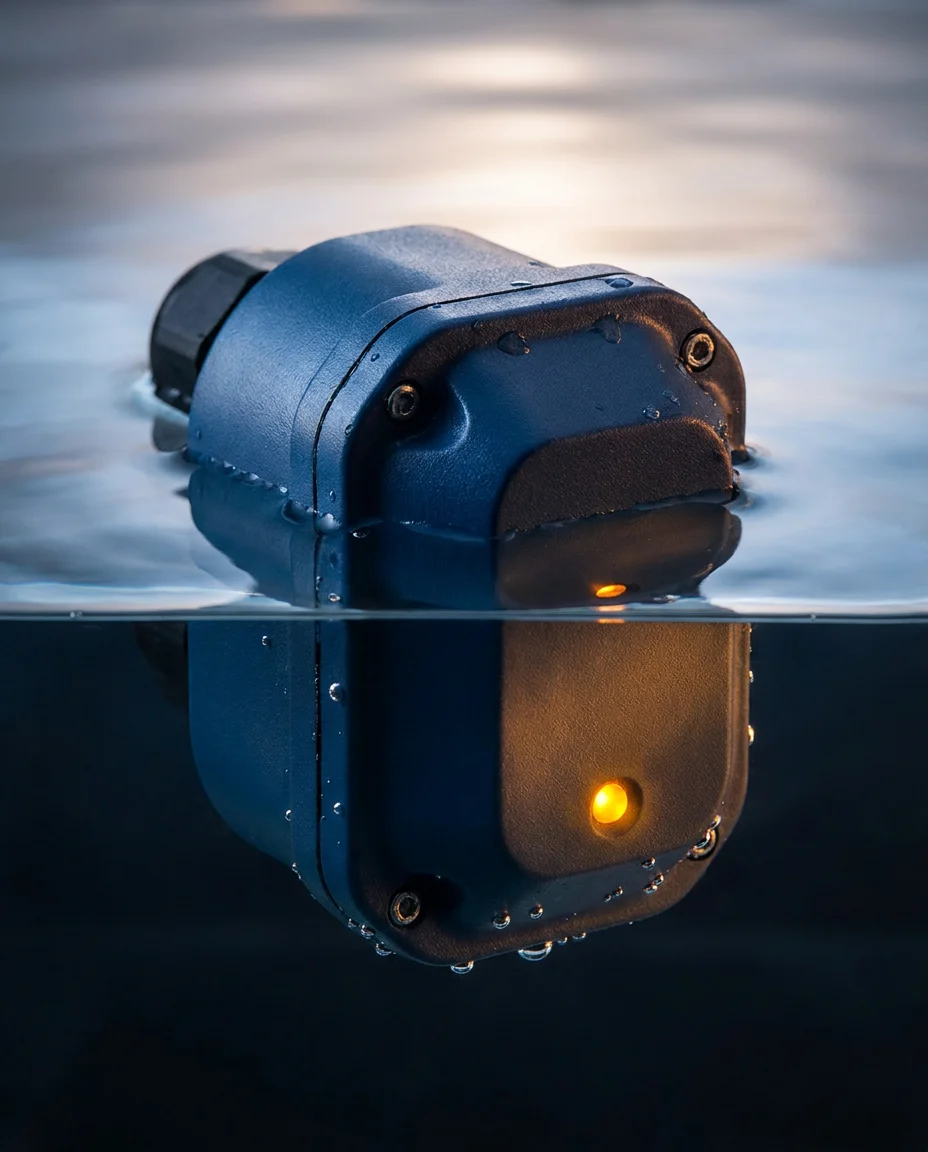
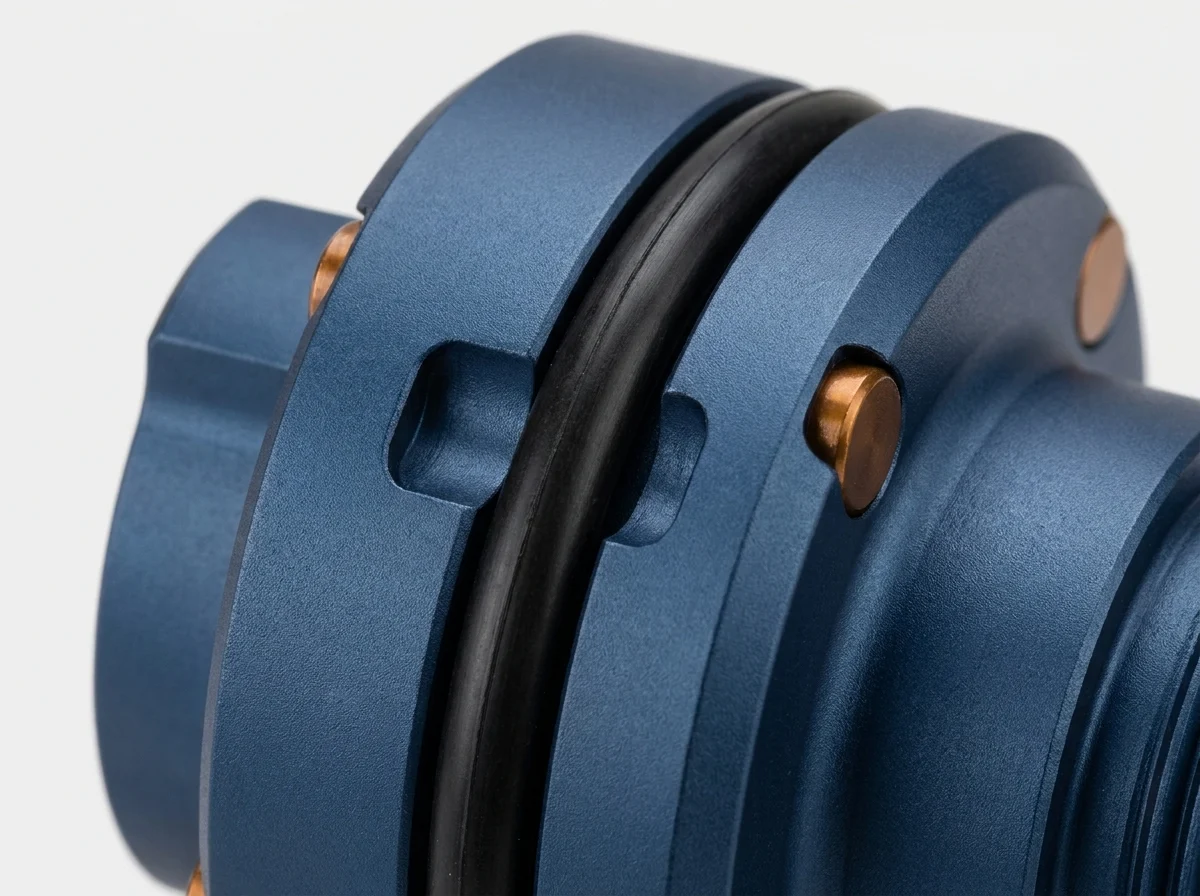
Cheap leak sensors rarely die from the electronics. They die from a body that rusts and a probe that oxidises where it was meant to sit. The housing is rated IP67, so it is dust-tight and withstands immersion to 1 m for 30 minutes, and the seams are gasket-sealed. A unit that gets splashed, sits in a wet tray or is briefly submerged in an overflow keeps running instead of shorting out.
The probe contacts are gold-plated to resist oxidation, which matters because a corroded contact drifts the conductance threshold: at best it starts nuisance-tripping, at worst it stops bridging and the guard goes quiet without anyone knowing. Gold plating holds the threshold stable through months in a damp drip tray — exactly where these sensors are meant to live, and why the IP67 rating rides alongside the electronic certifications.
A Guard That Stays Awake for Years
Low-power design so the sensor put under a sink is still armed when the leak finally arrives.
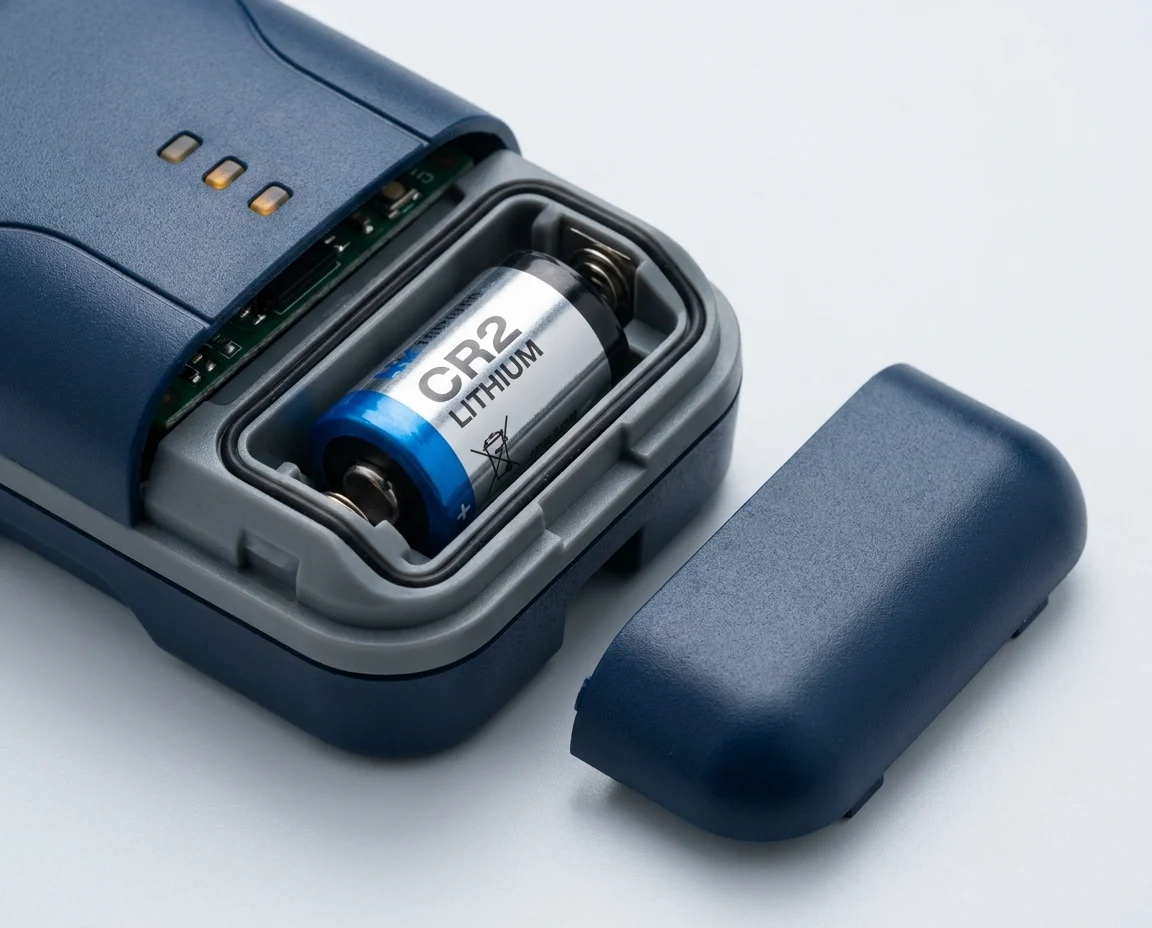
on a single CR2 lithium cell
In its resting state the sensor draws only microamps: the open conductance bridge keeps the radio asleep and wakes it only when water closes the circuit. That gives roughly 24 to 36 months of standby on a single CR2 lithium cell, with AAA and coin-cell variants available depending on the SKU.
Because a dead sensor is worse than no sensor, a low-battery threshold fires both a local chirp and a push notification to the app while there is still charge left — your customer swaps the cell on a warning rather than discovering the failure after a flood. That single behaviour removes the "silent battery death" complaint that turns a trusted guard into a liability.
From Beep to Shut-Off: The Tuya & Zigbee Platform Fit
A leak that only beeps in an empty house is a leak nobody hears. The platform is what turns detection into action.
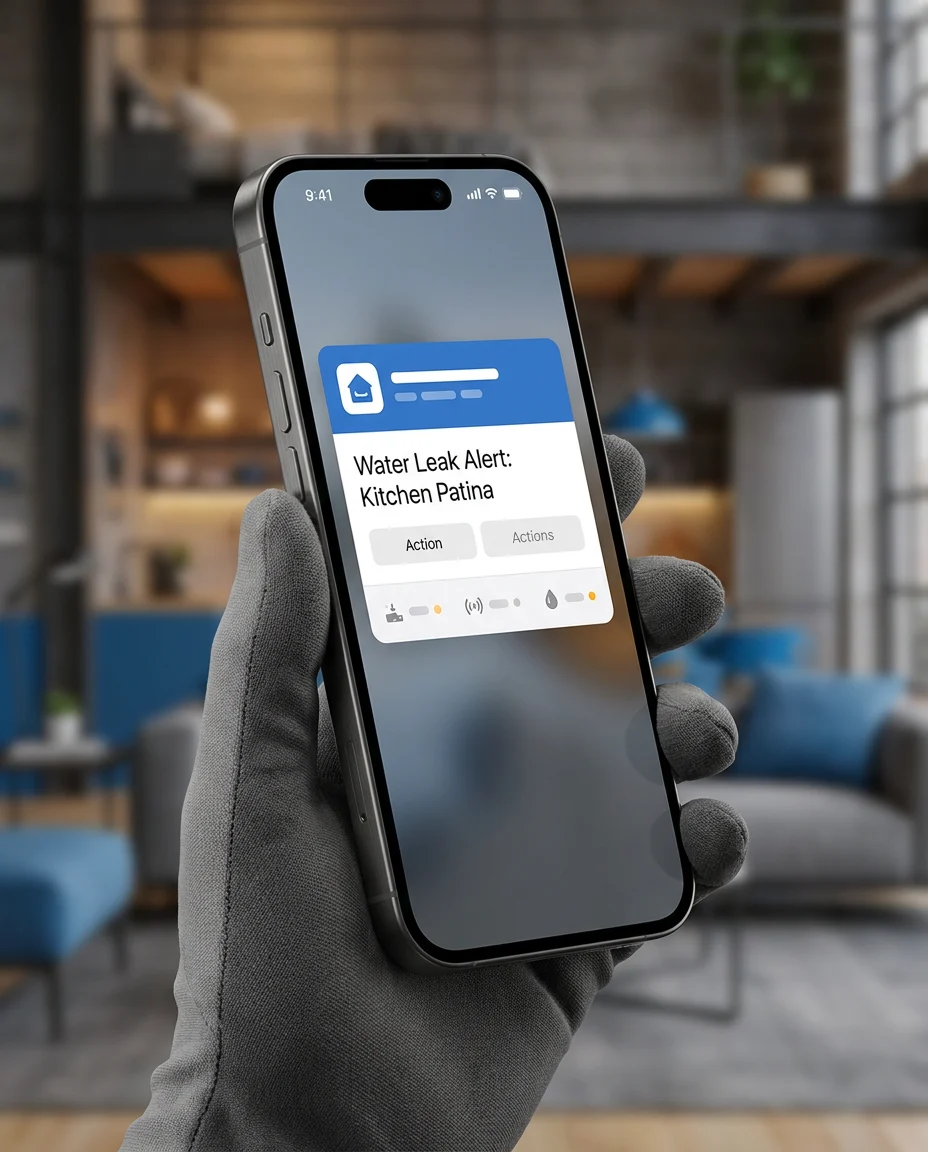
Every unit pairs to Tuya / Smart Life over Zigbee 3.0 or 2.4 GHz WiFi. The instant the bridge closes, the app pushes a leak alert to the owner's phone anywhere in the world, while a loud local buzzer sounds on site for anyone present — a dual local-plus-remote alert that reaches both the empty house and the room next door.
The differentiator is scene automation: linked in a Tuya scene to a motorised shut-off valve, a leak event can close the water main on its own, so the flood stops at the source instead of running until someone gets home.
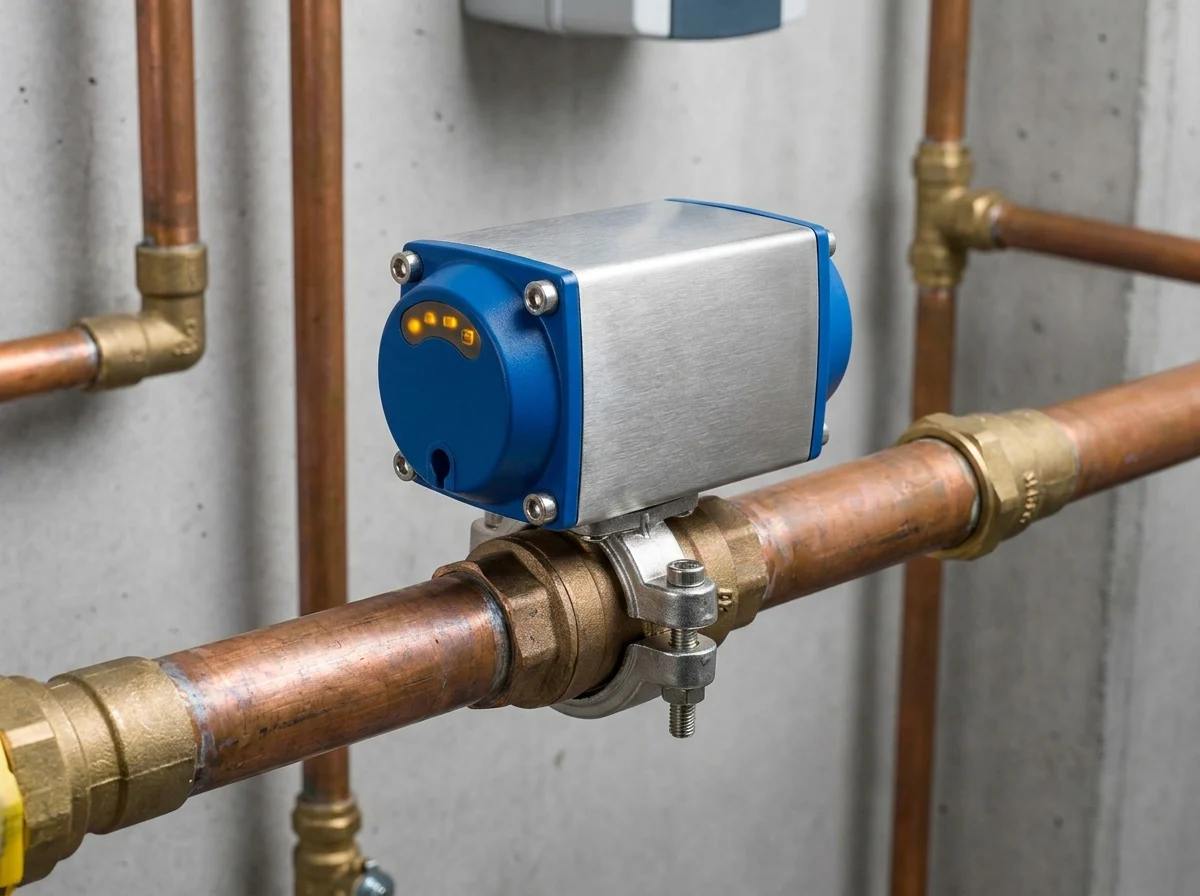
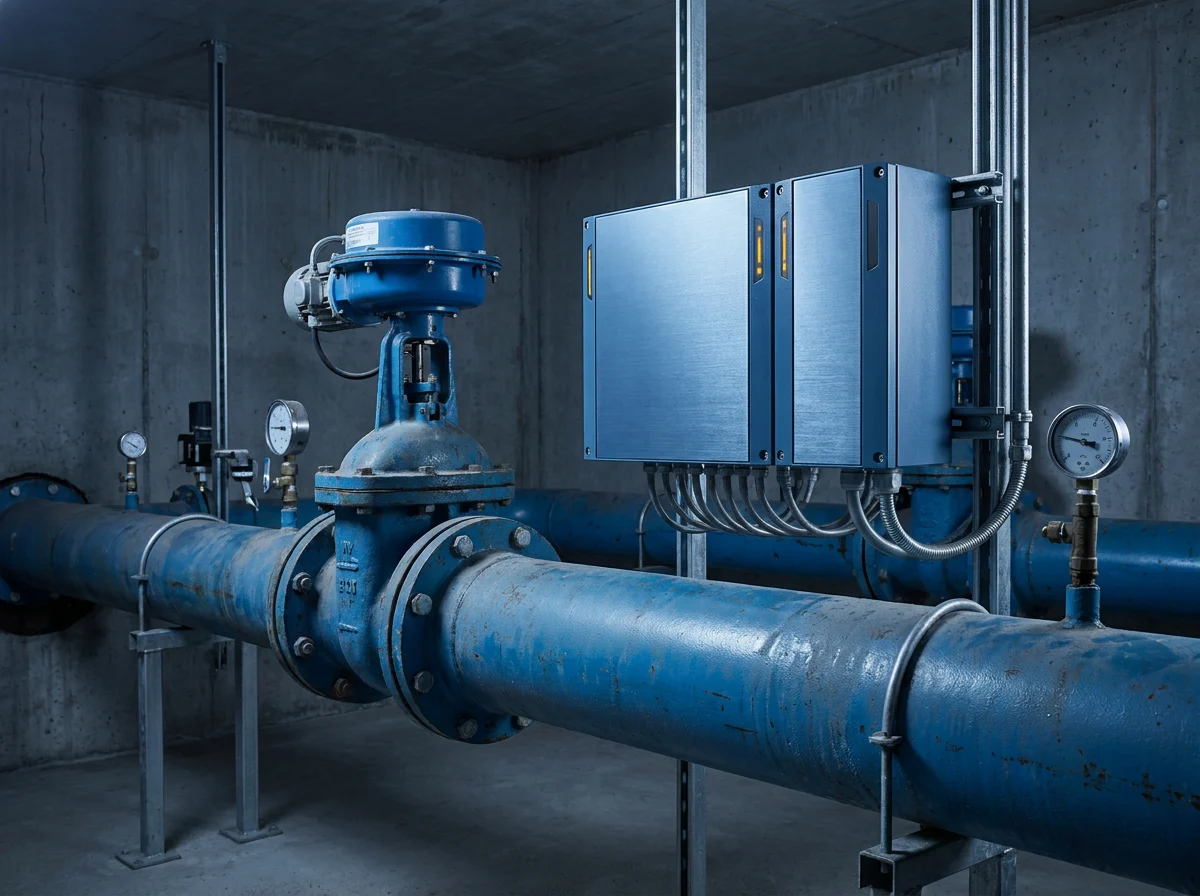
Your branding, from the app skin to the device name
For OEM buyers the whole experience carries your branding, from the app skin (the Tuya flood sensor OEM build) to the device name. Everything here is written around leak events, wet-placement push and shut-off scenes — the water side of the smart home.
What You Can Change, and the Volume to Start
From a logo on a stock unit to a fresh mould, the ladder is laid out before you commit a cent.
- Logo, housing colour & packagingYour brand from the carton to the wall — print area, colour and manual.
- Probe formSpot, pad or cabled length — pick the body your shelf needs.
- Connectivity choiceBuild the range on Zigbee, WiFi or a boxed gateway-kit.
- App branding on the Tuya skinPairing and leak notifications appear under your name — a custom home security alarm build centred on water.
+15–30 d if a mould change
See the Bridge Trip Before You Buy
Ask for a functional sample and dip the probe yourself — get a working unit you can test in a dish of water, then move to a quote once you have watched it fire. No spec sheet proves a leak sensor the way a wet probe does.
Request SamplesHow Every Unit Is Tested Before It Ships
The wet test here runs on every single unit, and the sampling sits on top of it.
CE, RoHS, FCC, ISO 9001 & the IP67 waterproofing proof
Certification runs the electronic and RF set — CE, RoHS and FCC — with ISO 9001 quality management behind the process and the IP67 ingress rating standing as the waterproofing proof.
CE Marking
Conformity for the European market — what a distributor's compliance team asks for first.
RoHS
Restricts hazardous substances in the electronics — increasingly a purchase-order requirement.
FCC
US radio and electronic emissions rules — required before any WiFi or Zigbee product lists.
ISO 9001
Quality-management system standing behind the whole build process.
IP67
The ingress rating that proves the waterproofing these wet placements depend on.
Certificates and test reports are available on request; specific registration numbers are shared with buyers rather than published on the page, so your compliance team can verify them before committing. The full inspection loop and test lab are detailed on our quality control & certifications page.
The Factory Behind the Sensor
We have manufactured electronic safety devices since 2009, so 15+ years of production sit behind this range. Six SMT placement lines and ten assembly lines feed the leak-sensor programme, twelve injection-moulding machines (80–320 t) make the housings in-house, and a 20+ engineer R&D team across circuit, structure and firmware tunes the conductance threshold and the Tuya integration.
Because your order sits with the plant that builds the sensor instead of passing through a reseller, a spec change reaches the floor directly. Repeat orders run about 70% of volume as a water leak alarm factory — the plainest signal that buyers keep coming back. The full company story lives on the About page; finished sensors ship worldwide by sea or air on EXW / FOB / CIF / DDP terms.



Tell Us What You Are Sourcing
Send the spec and a quote comes back inside one business day. A functional sample follows in 7–15 days, charged at cost and taken back off the bulk invoice once production is placed.
Sourcing dry-contact or motion sensors as well? See our door & window sensor and PIR motion sensor pages.