Bluetooth Key Finder Manufacturer for Wholesale and OEM Item Trackers
We manufacture Bluetooth key finders and item trackers for wholesalers, marketplace sellers, and app-brand owners who live or die by two things: a tag that holds its connection and an app their customers can actually use. Every tracker pairs on Bluetooth 5.0 or 5.2, finds in both directions, and runs on Tuya, Apple Find My, or your own branded app. Stock our catalog tags, or bring your brand and packaging and we build the tracker underneath them — with a working sample paired to your phone for sign-off before the first bulk reel is loaded.
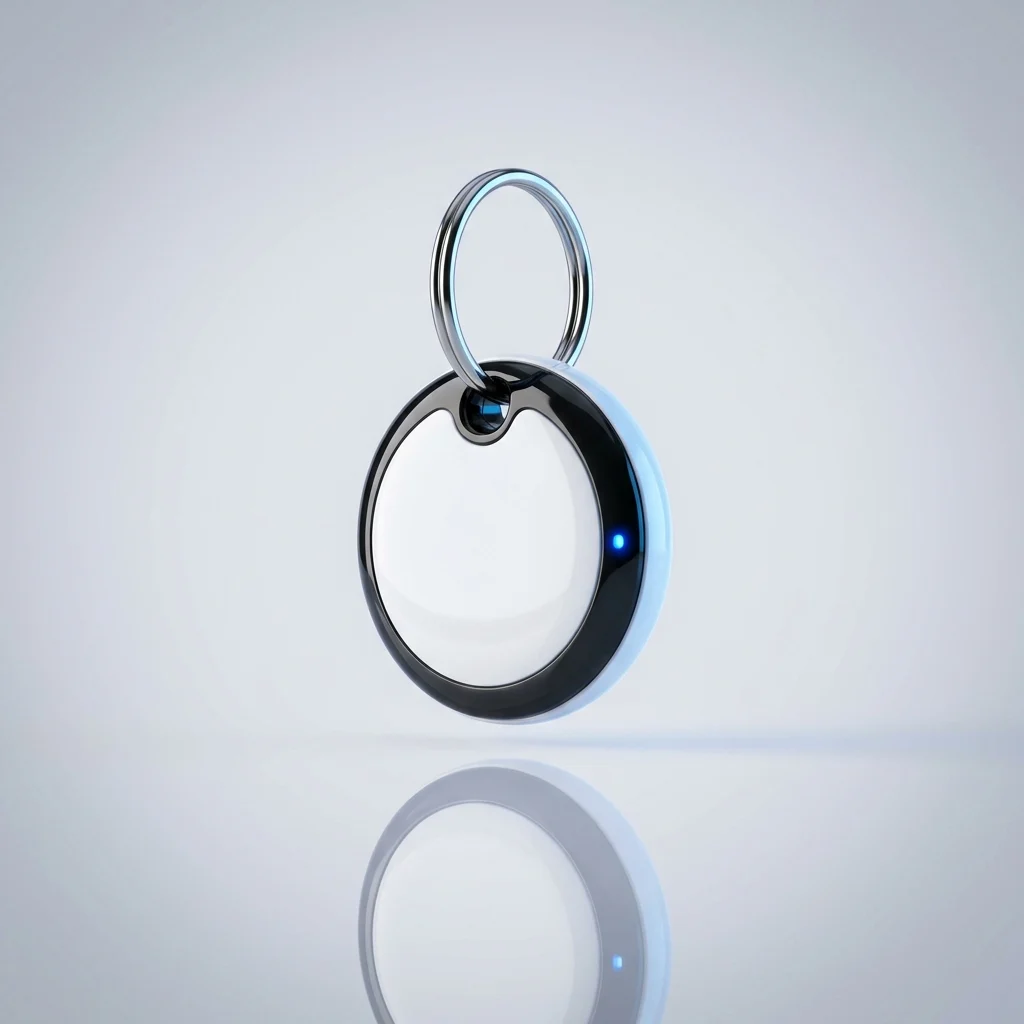
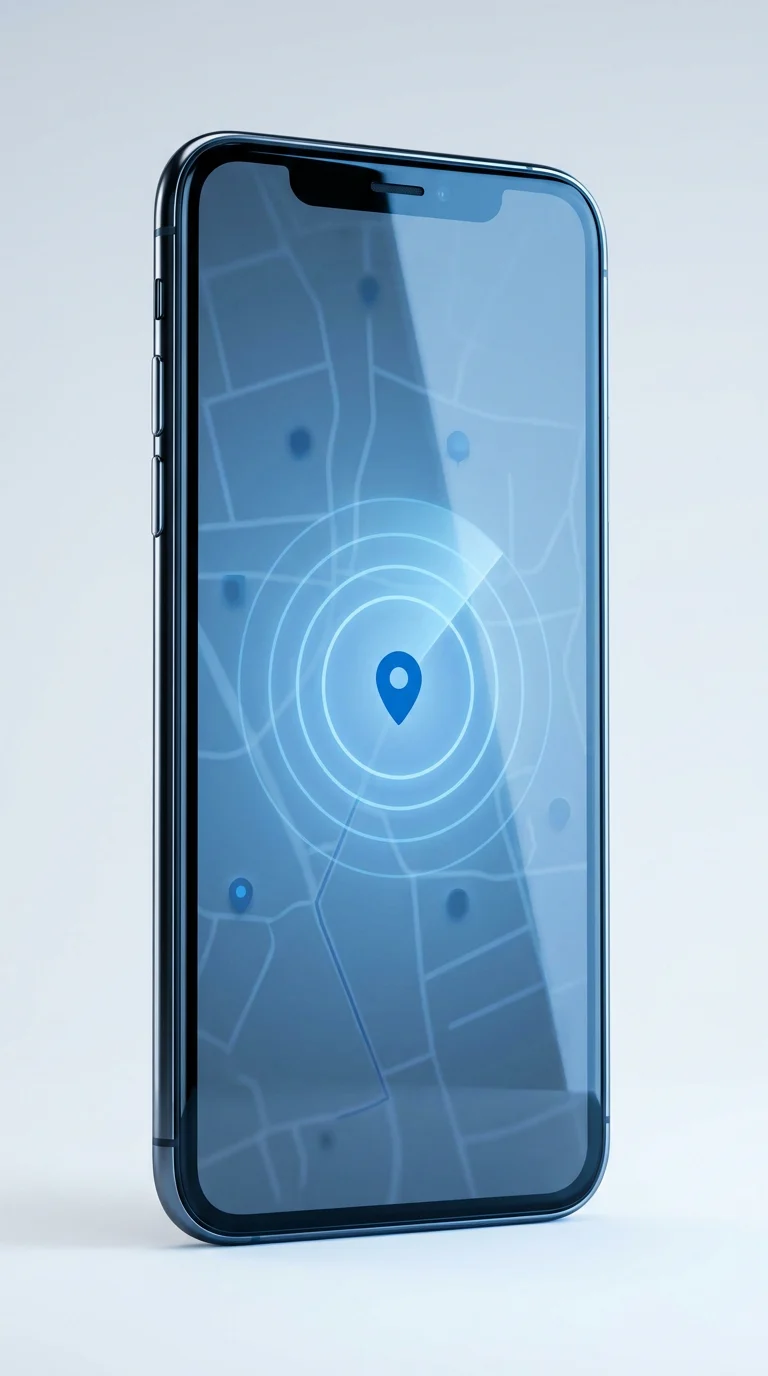
The Bluetooth Item Trackers We Make
Most sellers cover a tracker listing by buying a key tag from one supplier and a luggage tag from another, then finding out the two apps behave nothing alike. We build the whole form-factor range on one Bluetooth platform and one app stack, so a buyer can stock several shapes and every one of them pairs, rings, and updates the same way. The radio, the firmware, and the app integration carry across models; what changes from SKU to SKU is the body, the attachment point, and the battery format.
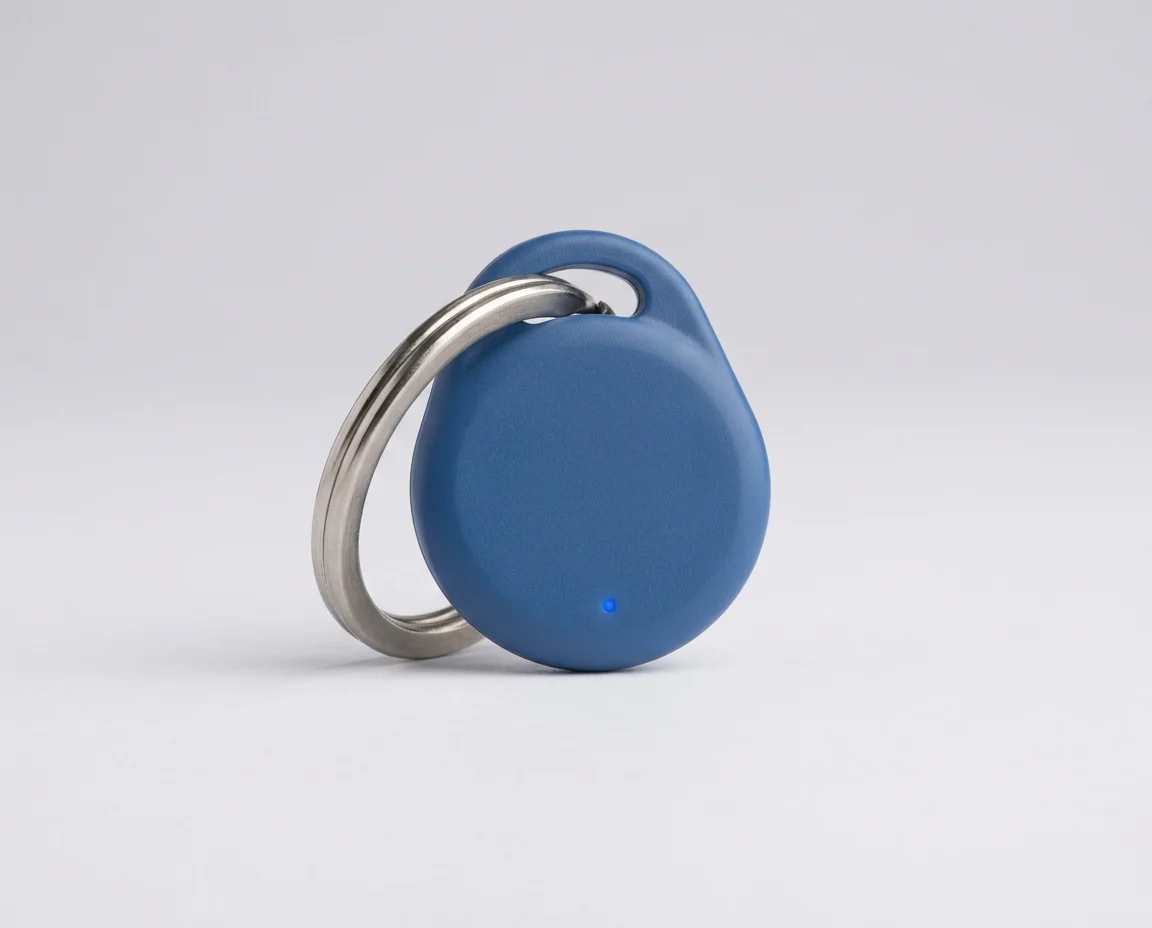
Keyring-shaped tag, the core stock unit that moves in volume.
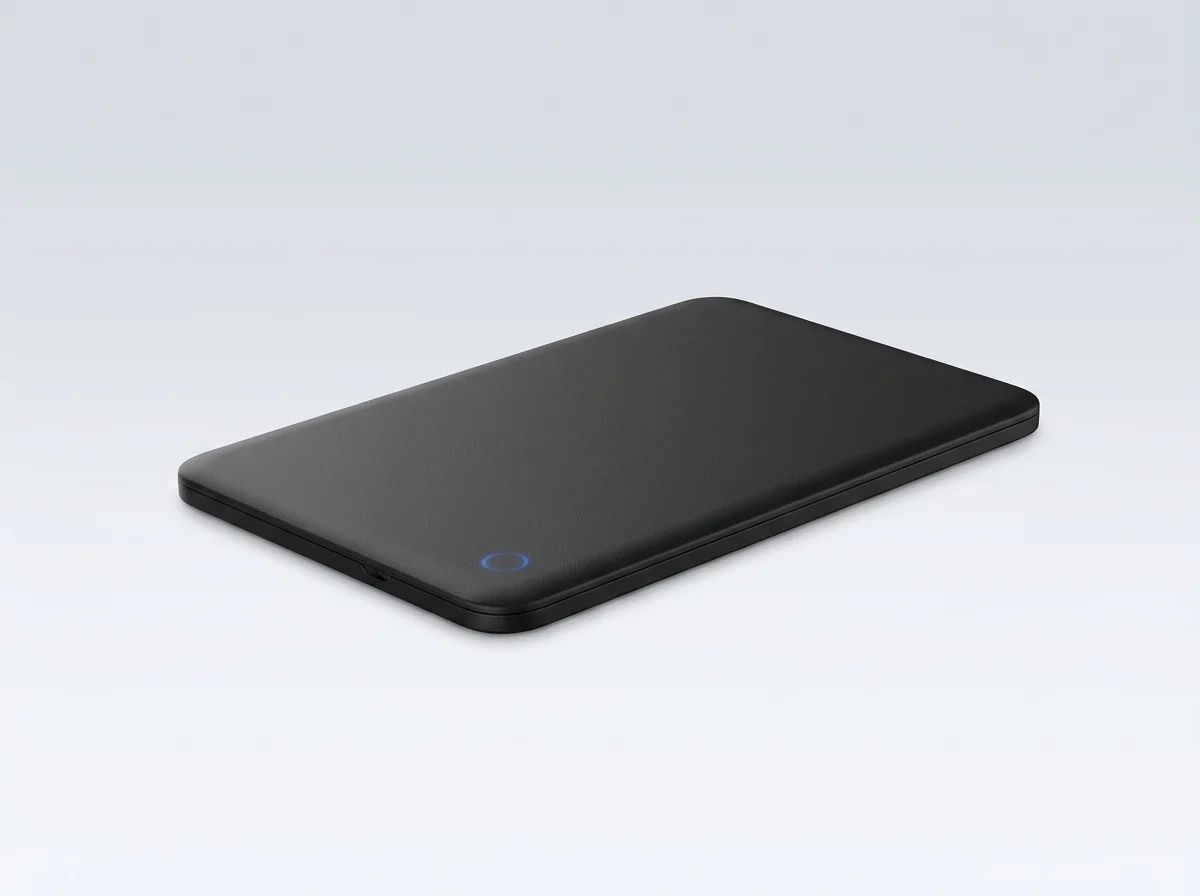
Credit-card-thin tracker for wallets and passport holders.
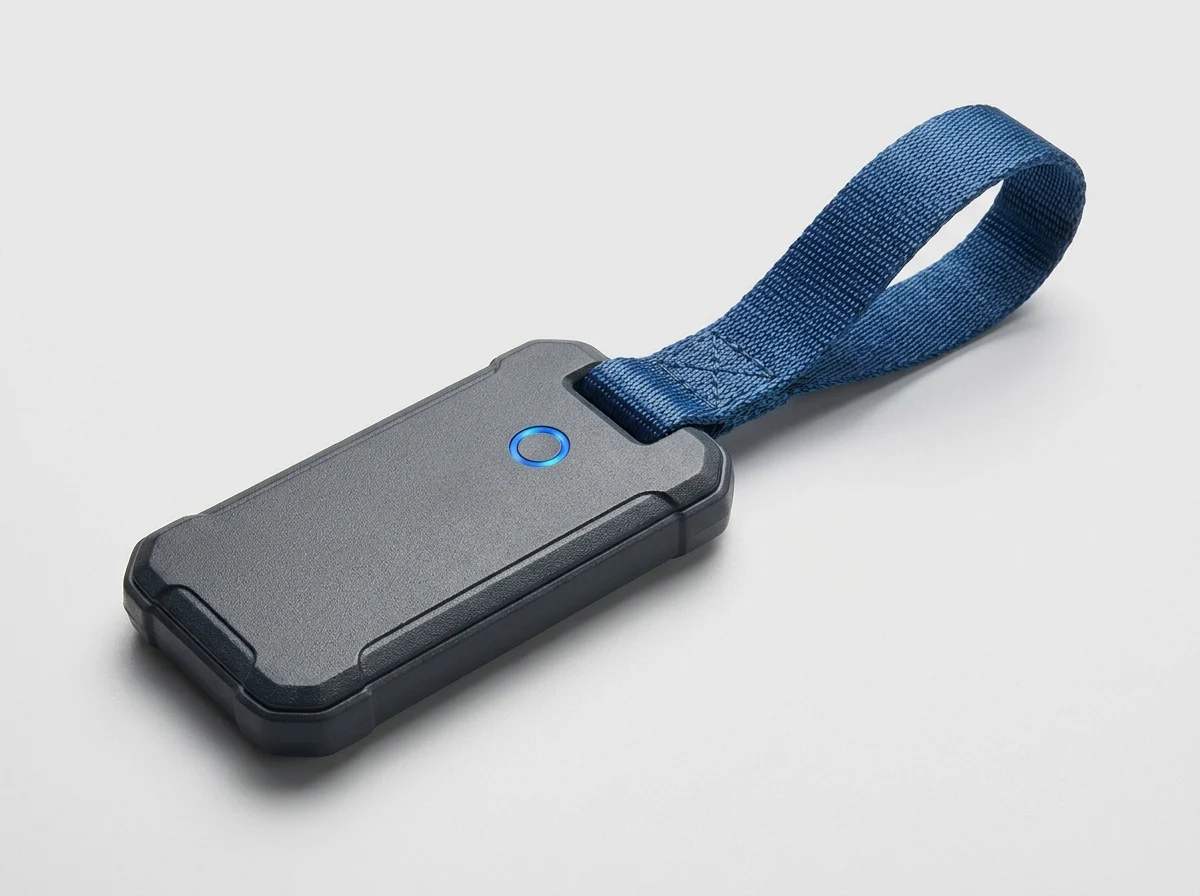
Rugged tag for bags and cases, Find My-ready.
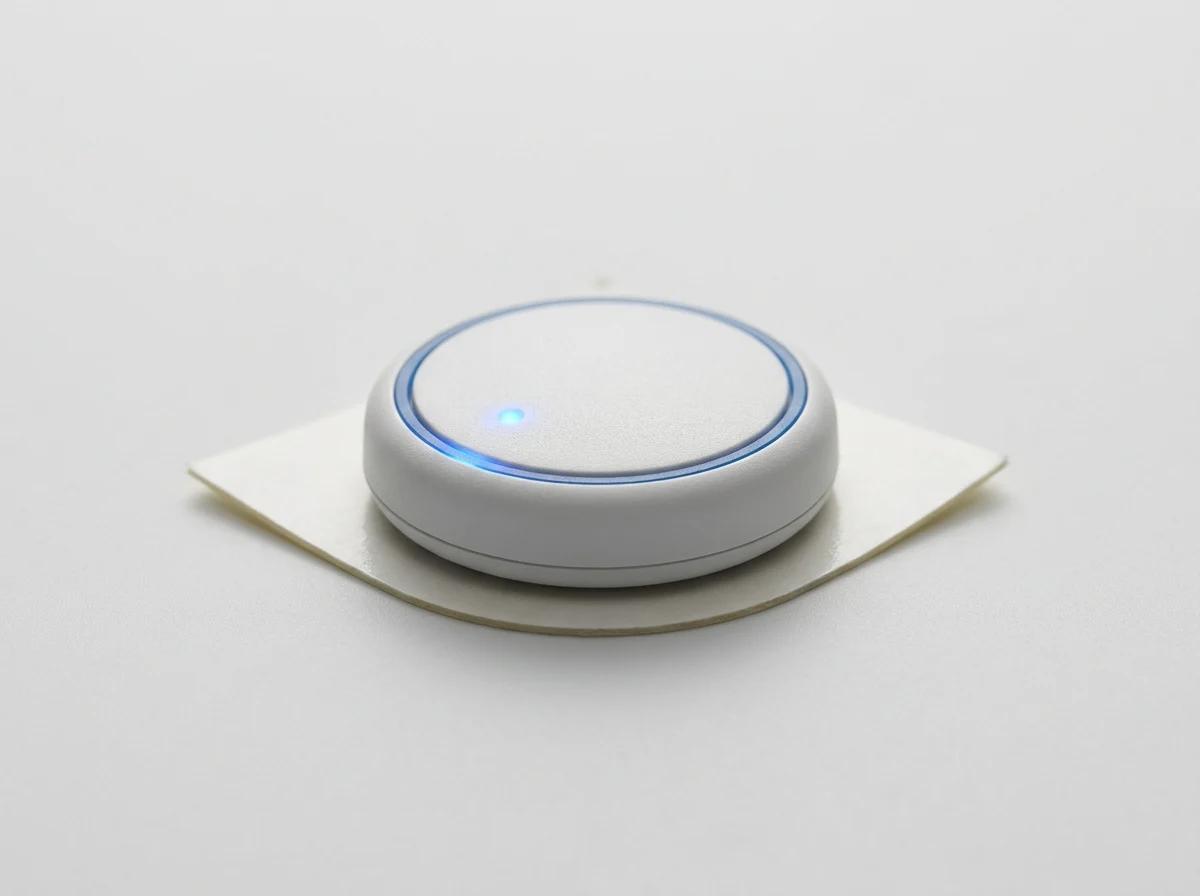
Compact stick-on tag for remotes, cameras, and tools.
Configure form factor, app identity, and housing into a tracker no competitor is listing.
Build a custom trackerFor real-time, long-range location over cellular rather than Bluetooth proximity, we route buyers to a different radio for a different job:
Cellular location that works anywhere, not just within Bluetooth range — a separate product line.
GPS keychain trackerLive location and geofencing for pets over cellular, built on the GPS platform.
pet GPS collar trackerBluetooth 5.0 / 5.2 Connection and Reconnection Range
A key finder is only as good as the link between the tag and the phone, so connectivity is the spec we engineer to first. Our trackers run on Bluetooth 5.0 or 5.2, the low-energy radio built for exactly this job: a stable connection at low power, with a usable range of roughly 60–80 m in open line of sight and a realistic 15–30 m through the walls and pockets of everyday use.
That indoor figure sits well below the open-field maximum for a physical reason — 2.4 GHz Bluetooth attenuates as it passes through load-bearing walls, appliances, and metal — so we rate range against typical wall construction for the indoor case buyers actually operate in, rather than printing the open-field number on the box.
- Signal-strength homingThe app reads live signal strength, so a user can walk toward a stronger signal to close in on a misplaced item.
- Last-seen location on the mapWhen the tag moves out of range — a bag left in a taxi — the phone logs the last-seen location and time, so the search starts from where the link was lost.
- Automatic reconnectionThe instant the tag returns within range it reconnects with no re-pairing, and an optional out-of-range alert warns the moment the link breaks. On a bulk locator program, that self-reconnecting consistency across every unit is what keeps a large deployment dependable.
Two-Way Finding and Anti-Lost Alerts
Buyers ask one question first about any tracker: does it work both ways. A one-way tag that can only be rung from the phone solves half the problem and gets marked down for it. Our trackers find in both directions, and the same link drives an anti-lost alarm that works while nobody is actively searching.
The separation threshold and the alert tone are adjustable in the app, and a safe-zone whitelist stops the alarm nagging at home or in the office, where a tag is meant to sit out of reach. This two-way find plus walk-away alert is the core of the product, and it is where a dependable tag separates itself from a cheap one that only rings one way.
One tap sends a ring command over Bluetooth and the tag's buzzer sounds until the item is found — keys down the back of a sofa, a remote under a cushion.
A press of the button on the device rings the paired phone at full volume even when the phone is set to silent, so a customer at the door can find the handset they just put down.
The app watches the connection, and when the phone and tag separate beyond a set distance — you walk away from a bag on a café chair — both the phone and the tag alert within seconds, before the item is truly gone.
App Integration: Tuya / Smart Life, Apple Find My, and Custom OEM Apps
For a private-label buyer, the app is the product, so we give buyers three proven integration paths instead of a home-grown app nobody maintains. Whichever path you choose, the pairing flow, ring, last-seen map, and anti-lost alerts behave consistently, and we confirm the exact platform, finding-network compatibility, and app-branding scope in writing before tooling.
Tuya / Smart Life ecosystem
Our tags connect into the mature Tuya app and cloud, which already handle pairing, mapping, ring, and separation alerts and are kept current by a platform team — a fast route to market on an app your customers already trust.
Apple Find My compatibility
Models built to the Find My specification appear directly in the iPhone's own Find My app and can be located through Apple's global finding network, so an iPhone user needs no third-party download at all.
Your own custom-branded app
The reason most OEM buyers come to us: we deliver the tracker under your own app identity — your name, icon, colors, and store listing on iOS and Android — over a white-label app framework, so your brand owns the screen the customer opens every day instead of handing that surface to a generic app.
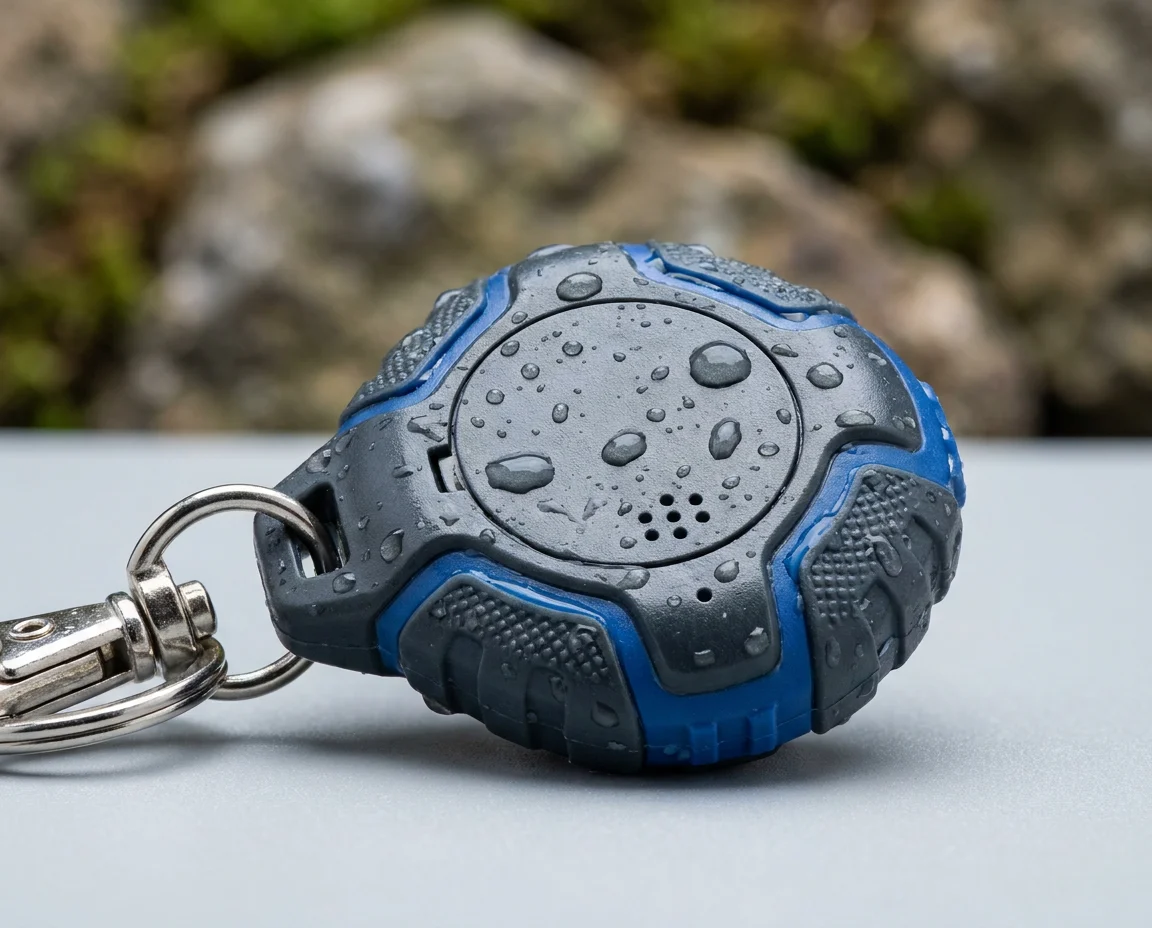 IP67 immersion
CR2032 / USB-C
~85 dB buzzer
IP67 immersion
CR2032 / USB-C
~85 dB buzzer
IP67 Waterproofing, Battery Options, and Locator Buzzer
A key finder lives on a keychain, in a pocket, clipped to a bag — outdoors, in the rain, dropped in a puddle — so a tag that dies the first time it gets wet is a return waiting to happen. Our trackers are rated IP67: fully dust-tight and able to withstand immersion in up to a metre of water for 30 minutes, which covers rain, spills, and an accidental drop in the sink.
- Replaceable line — CR2032, ~12 monthsA standard coin cell the end user swaps in seconds, for roughly 12 months of normal use before a simple battery change rather than throwing the tag away. The gasketed compartment sits under a twist-lock cover that re-seats its seal each time, so the IP67 rating holds through a battery change as long as the cover is shut properly.
- Rechargeable line — sealed USB-C, ~3–6 monthsFor the highest ingress protection with no user-serviceable opening, a lithium cell fully sealed inside the housing, topped up over a waterproof USB-C port, good for around 3–6 months per charge depending on how often the tag is rung — which suits reorder-friendly retail programs.
- ~85 dB locator buzzerBuilt to actually be heard: loud enough to find keys across a room or under a car seat, not the faint chirp of a bargain tag. Every tag is powered on and its buzzer, button, and pairing are function-tested before it ships.
Key Finder Specifications
Each tracker comes with a complete spec sheet, so your product page and your compliance reviewer read from one set of numbers instead of guessing. Core specifications:
- Bluetooth versionBluetooth 5.0 / 5.2 (BLE)
- Usable range~60–80 m LOS; 15–30 m indoors (RSSI-homing)
- Two-way findRing the tag from the phone · ring the phone from the tag
- Anti-lost alertAdjustable separation distance + last-seen location map
- App integrationTuya / Smart Life · Apple Find My (model-dependent) · custom OEM app
- Waterproof ratingIP67 (dust-tight; 1 m immersion, 30 min)
- Buzzer outputup to ~85 dB locator buzzer
- Battery — replaceableCR2032 coin cell, ~12 months typical use
- Battery — rechargeableUSB-C sealed lithium, ~3–6 months per charge
- HousingABS; keyring / card / adhesive form factors
- DimensionsKey tag approx. 38 × 38 × 7 mm (model-dependent)
- Weight~10 g key tag; ~5 g mini locator
Range, dimensions, and per-model battery figures are confirmed against the specific SKU on your quote.
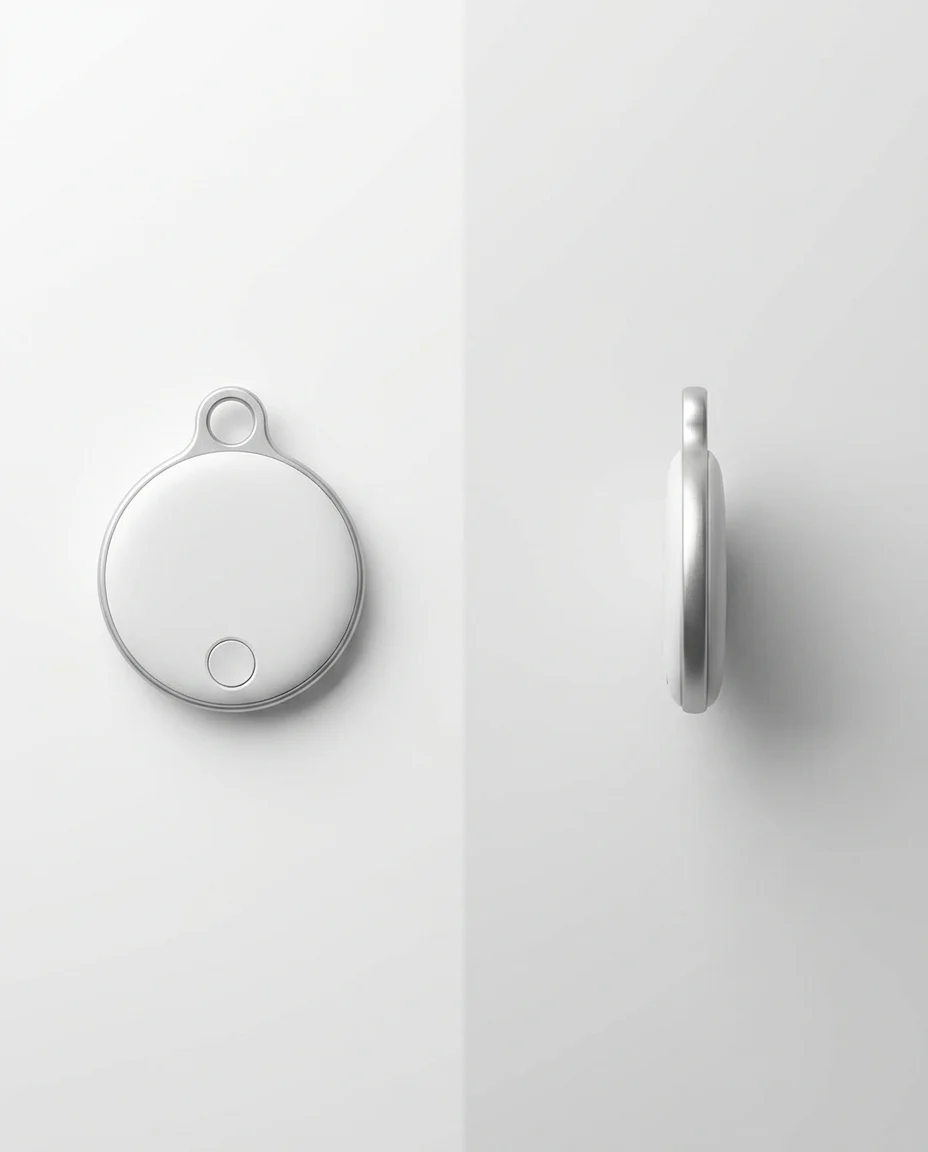
OEM and ODM Key Finders: Logo, Form Factor, and App Branding
What sets a private-label tracker apart from a generic tag is rarely the plastic — it is the app the customer opens and the brand on the screen. That is where our OEM/ODM program puts its weight. As a smart key finder factory, our 20+ engineers across circuit, structure, and firmware take customization from a printed logo all the way to a new housing and a fully branded app.
What you can change
- BrandingPrinted or laser-marked logo, custom body color, and full retail packaging with your artwork and barcode.
- App identityYour own branded app on iOS and Android (name, icon, colors, store listing), or a specified Tuya / Apple Find My integration instead.
- Form factorKey tag, card, luggage tag, or mini locator, including a new molded shape when you want a body no competitor sells.
- FunctionBattery format (replaceable or rechargeable), buzzer tuning, and Bluetooth/range configuration for your use case.
MOQ tiers are fixed so you can plan
The custom app program
Building and publishing an app has nothing to do with molding a tag, so it is quoted separately from the hardware. The usual shape: a branded iOS and Android app on the proven Tuya framework runs about 3–6 weeks from brief to store submission; a one-time app setup and branding fee covers the UI theming, store-listing assets, and build configuration, priced per project rather than per unit. We handle dual-platform publishing to the App Store and Google Play, and you fix the ownership model at the start — the app can ship under your own developer accounts with the source and assets handed to you, or run under our accounts on a maintenance plan, whichever you prefer.
Because it is a separate line item, the app work is independent of the hardware MOQ tiers above: a 1,000-pc private-label order and a fully branded app are priced and scheduled on their own tracks, so a "function change" MOQ is never mistaken for app development cost. Already running your own app or platform? The open SDK / API covers that case, so you can skip the app build entirely and still ship our tags inside the software you already have. Walk the end-to-end custom flow on our OEM & private label manufacturing page.
Certifications: CE, RoHS, FCC, and Bluetooth (BQB)
A wireless tracker has to clear two kinds of gate before it can list: the general electronics approvals every device needs, and the radio approvals specific to a Bluetooth product. A tag missing either one gets stopped at customs or pulled from a marketplace, so buyers check the set before anything else. Each mark opens a specific door:
CE
Conformity for sale across the EU and EEA, including the radio-equipment requirements for a Bluetooth device.
FCC
Radio and electronics compliance for the United States market, required for any device with a Bluetooth transmitter.
RoHS
Restricted-substance compliance for electronic goods.
Bluetooth (BQB)
Bluetooth SIG qualification confirming the tag's Bluetooth implementation meets the specification — what legally allows it to carry the Bluetooth name and logo.
The BQB qualification is the one buyers new to wireless products often miss, and it is exactly the one a marketplace or a customs check will ask for on a Bluetooth tracker. Certification scope is stated per model, and additional market approvals — UKCA, PSE, and others — can be arranged on request. Certificates and test reports are available on request; we do not publish registration numbers on the page — they are shared with your quote so you can verify them against your own listing and customs requirements. Battery-powered tags also ship with the MSDS and UN38.3 documents needed for air and sea freight. How every unit is inspected and tested is documented on our quality control & certifications page.

Why Source Your Key Finders From Our Factory
Sourcing straight from the factory means the people tuning the radio, flashing the firmware, and running the final pairing test are the same people who answer your emails — no trading house in between to mark up the unit or lose your spec on the way to the line. For a reseller that turns into the things a Bluetooth product actually needs from a supplier: 98% on-time delivery on committed dates, 100% functional inspection where every tag is powered on, paired, and buzzer-tested before packing, 20+ QC checkpoints across the line, and 500,000 pcs per month of capacity for real reorder volume. About 70% of our order volume is repeat business, which in a category this easy to get wrong is the clearest sign the trackers hold up in the field. A fast bilingual team answers within your working day.
Who Buys Our Bluetooth Trackers
We supply four buyer types, each sourcing trackers for a different job.

Marketplace and e-commerce sellers
Amazon, eBay, and Shopee listings that need units matching the spec on the page.
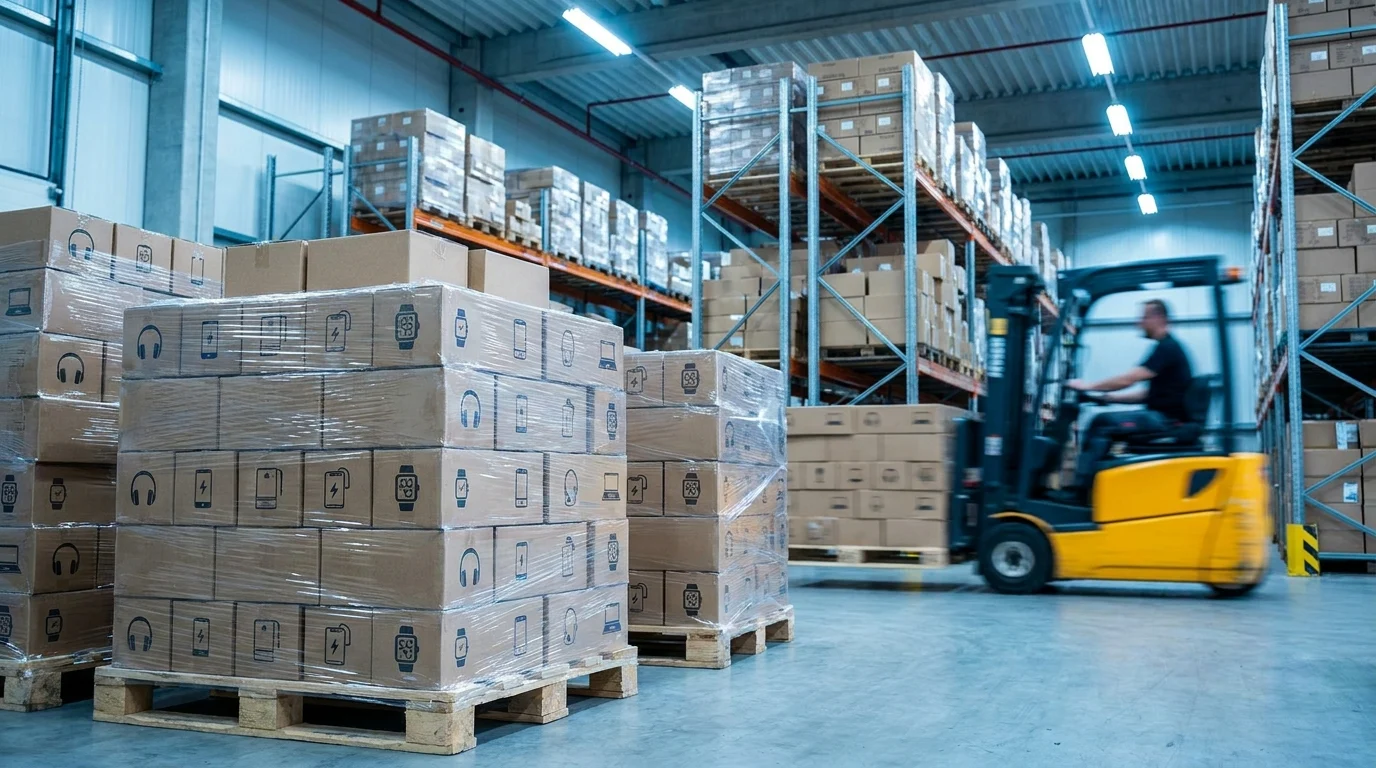
Electronics and gadget distributors
Stockists who need reliable bulk supply and a tag that behaves the same across every unit.
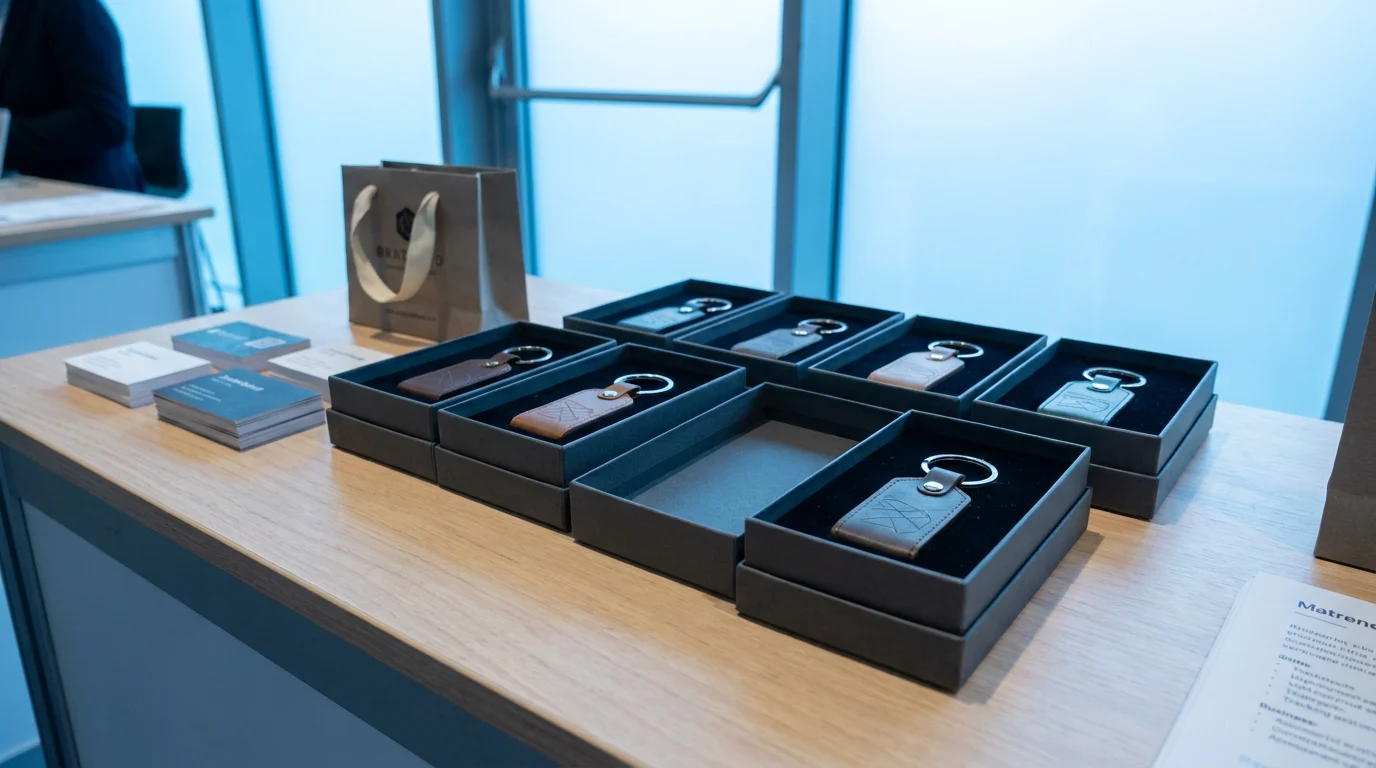
Promotional and gift buyers
Companies handing out branded key tags at events and to customers.
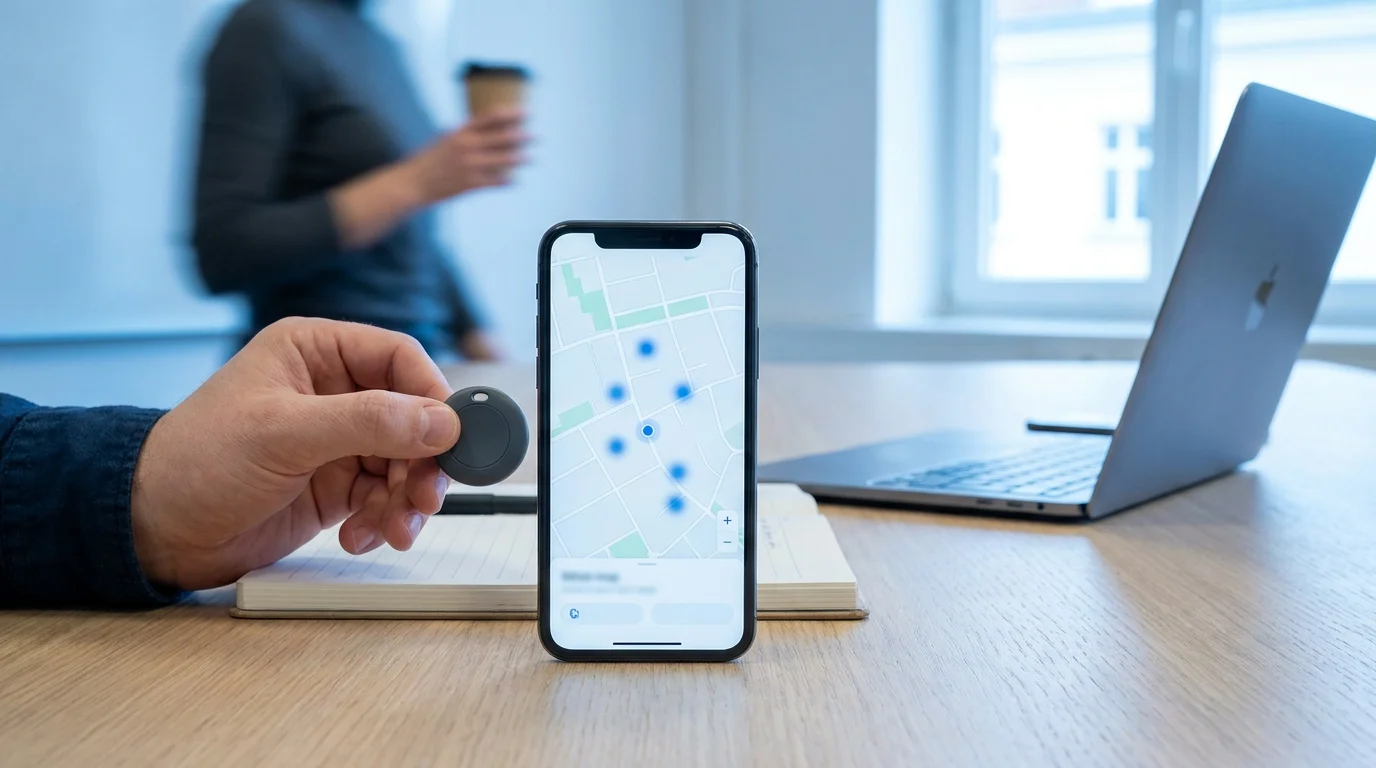
Private-label and app-brand owners
Brands that want the tracker under their own app identity.
Get a Quote or Request Samples
Tell us the form factor, the volume, and how you want the app handled — Tuya, Apple Find My, or your own brand — and we scope the tracker, the app path, and the terms around all of it. A working sample is paired to your phone first, so you sign off on the real thing before committing to a bulk run, and any sample charge comes back to you on the production order. If you would rather see the range before you specify, ask for the full tracker catalog and we will send it over.