
Neck pendant
Worn around the neck through the day on a breakaway safety lanyard that releases under load to prevent strangulation on a frail neck, so the button is in reach whatever the room.
~40 gbreakaway lanyard
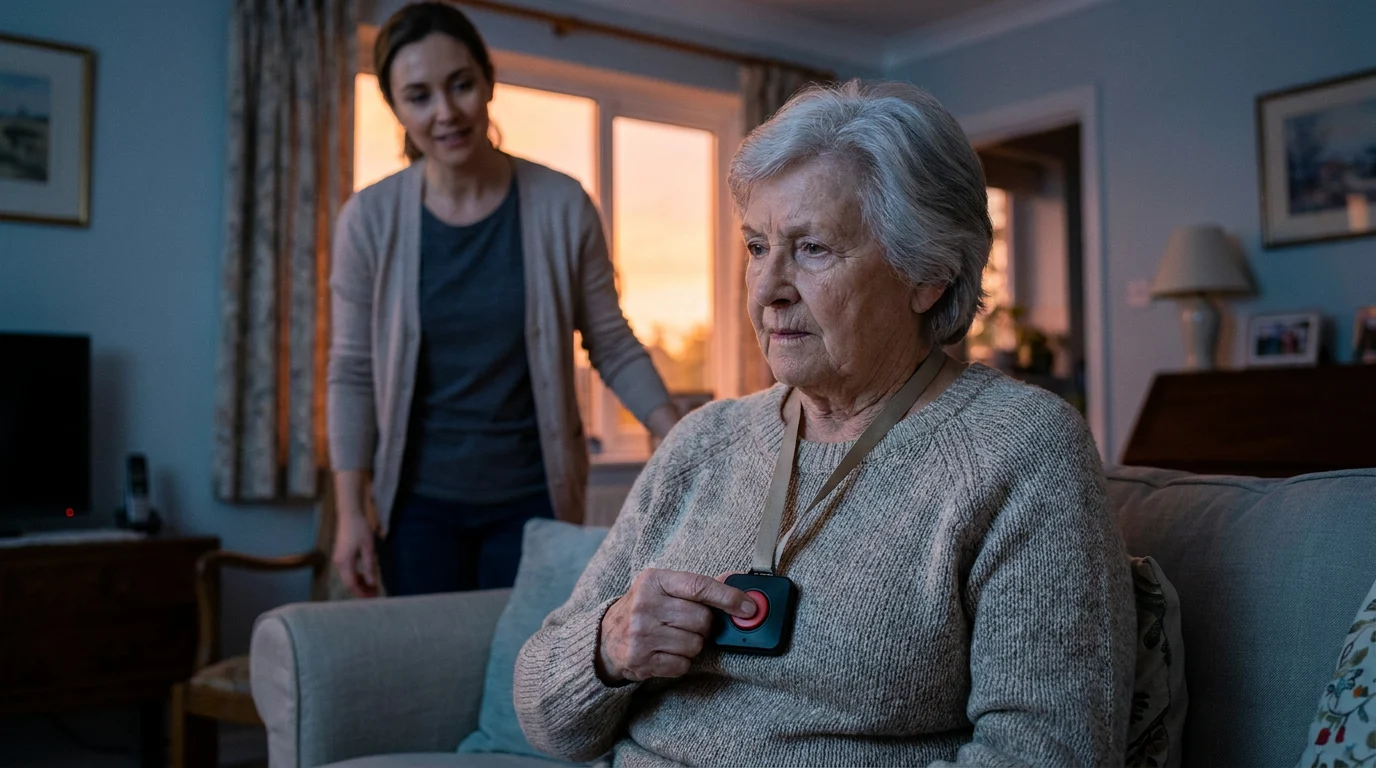
SafeTech Factory manufactures personal alarms built for an elderly and senior line: one large one-touch SOS button an older hand can press in a second with a weak grip and poor eyesight, worn where a senior keeps it in reach, and loud enough to bring a family member or a carer already nearby straight to the room. It is self-contained, with no monthly fee for the family to maintain. The 130 dB siren and internals are the same tested build as our personal-alarm line, so you private-label a proven alarm for a senior assortment.
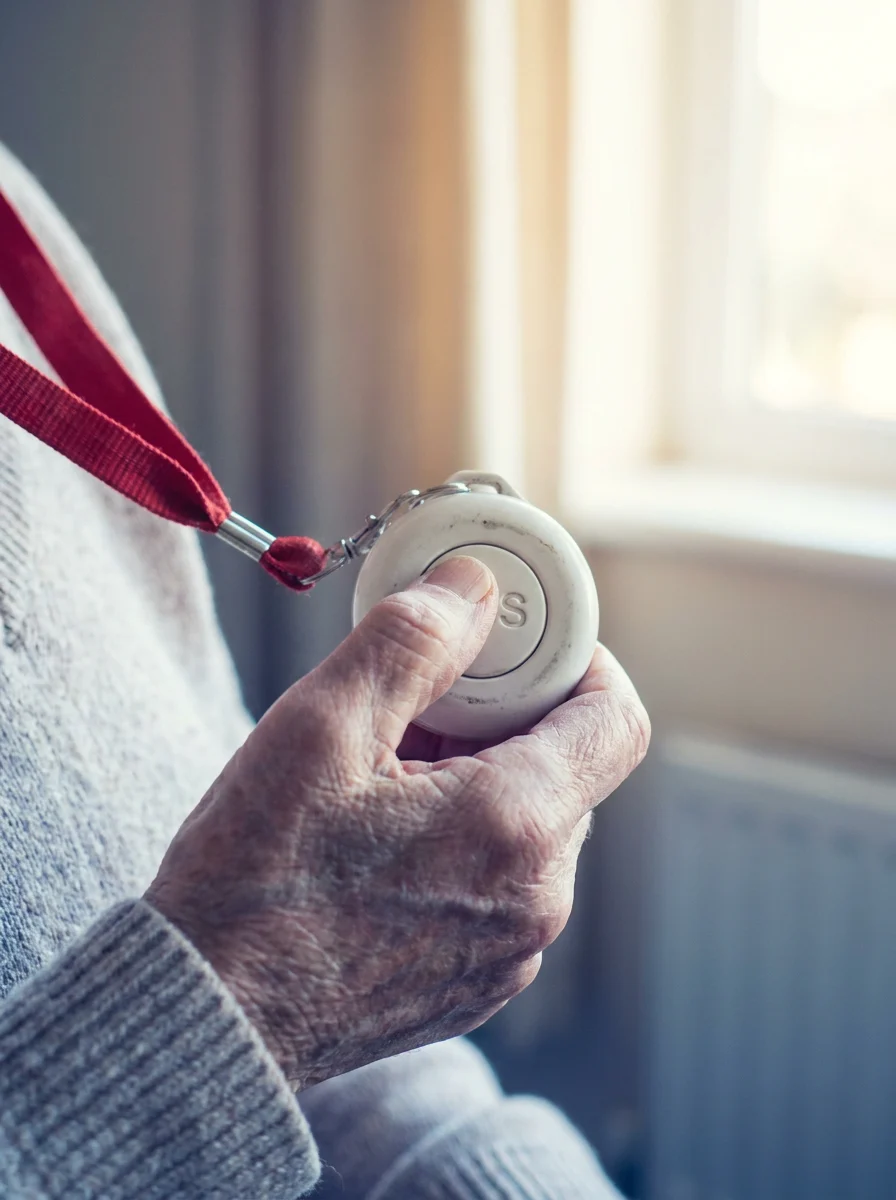
A small pull-ring or a cluster of tiny buttons defeats an older user, so the one moment the alarm is needed it does not fire. This line is built around a single large control a fingertip can find by touch, press without aiming, and confirm without needing to hear or see it clearly.
The button sits on the body at a colour contrast of at least 4.5 to 1, a bright amber or red control on an off-white or graphite housing, and it fires on a deliberate press-and-hold of about 1.5 seconds using the same anti-false-trigger retention proven on our personal-alarm line. A pull-cord activation is kept as a secondary trigger for a user who prefers it.
It is self-contained by design: nothing to pair, no account, and nothing for the family or the resident to keep up with — the unit switches on and works. Housing size runs about 58 by 44 by 16 mm, deliberately larger and easier to grip than a general alarm, because a senior unit is meant to be found and held, not hidden.
An alarm that ends up in a drawer is nowhere near the person during a fall or a night trip, so this line sits where a senior is most likely to need it, across five wear and reach forms — worn on the body or fixed at the point of risk.
Worn around the neck through the day on a breakaway safety lanyard that releases under load to prevent strangulation on a frail neck, so the button is in reach whatever the room.

For a user who will not wear anything at the neck, the same button on the wrist, always on the arm they reach with.

Sits or clips at the bedside so it is the first thing a hand finds on a night waking, without hunting in the dark.

Fixes on a bracket by the bed, toilet, or bath — the high-risk spots where a fall is most likely and a phone is out of reach.

Clips onto a walking frame or rollator so the alarm travels with the mobility aid, in reach wherever they walk.
Each senior moment maps to a wear placement above and to one payoff: bringing a person who is already nearby to the room. The placement map fixes each form to the point of risk where a fall or a night waking actually happens.
This line is built for buyers assembling an eldercare or senior-safety assortment, not a generic alarm listing. Each buyer comes with a different problem, and each gets one concrete deliverable.

Labels selling senior call buttons and help buttons that want a loud, simple, no-subscription SOS unit — often as an entry unit alongside a monitored offering.

Distributors buying in volume to issue to residents and staff across assisted-living and care floors.

Senior-living, mobility-aid, home-medical, drugstore, and occupational-therapy channels needing a unit a family buys for an ageing parent.

Councils, senior centres, and home-care agencies equipping older adults across a roll-out.

Cross-border marketplace sellers who lose the sale when the unit looks too fiddly for a senior.
For the shared mechanism, real-decibel testing, certifications, and full MOQ ladder across the range, see our personal alarm manufacturer hub. Custom terms sit on our OEM & private label manufacturing page, and how every unit is inspected and tested is on our quality control & certifications page. Audience and carry-format variants, a women's personal safety alarm and a keychain personal alarm, are part of the same silo.